Drilling composite and sandwich panels
The face seals well. The core may not take any load at all.
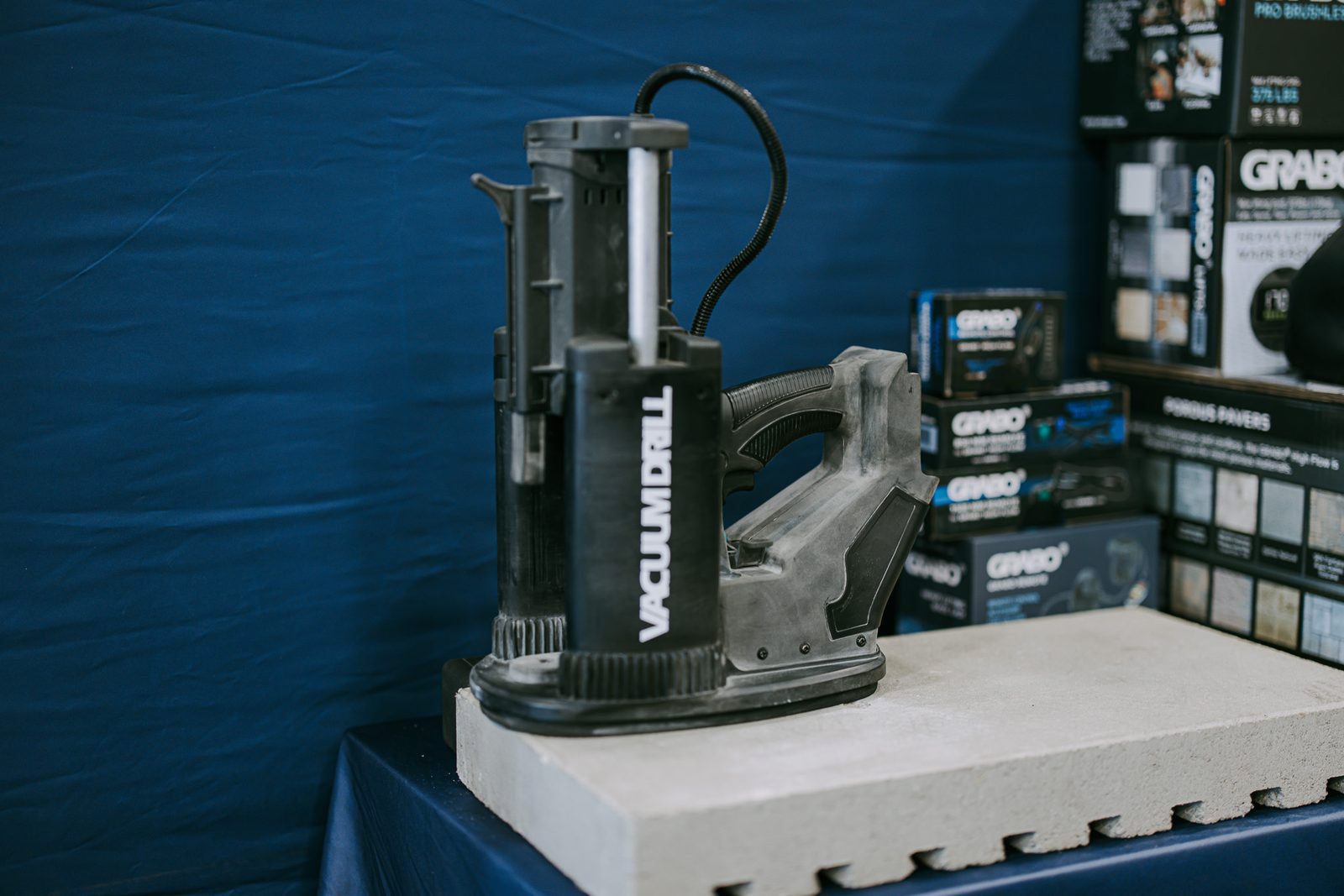
The substrate
Composite and sandwich panels present a thin, smooth, usually non-porous skin over a soft, hollow or foam core. The skin is an excellent sealing surface.
The real risk
The panel face may seal perfectly while being structurally incapable of carrying the attachment load. Vacuum attachment loads the skin, and a thin skin over a weak core can deform or delaminate.
Never assume a good seal means a safe attachment on sandwich construction.
Drilling
No hammer action. Sharp tooling, moderate speed, and support behind the panel where possible to prevent breakout on the far face.
Delamination around the hole is the usual failure — a fixed axis and controlled feed reduce it.
Fixings
Sandwich panels normally need specific cavity or through-fixings. A standard masonry anchor has nothing to grip.
At a glance
| Vacuum sealing | Good on the skin — but the skin may not carry the load |
|---|---|
| Recommended mode & tooling | Sharp bit, hammer OFF, supported behind |
| Limits on this tool | 40 mm max bit diameter, 200 mm max length, 145 mm max depth |
Common mistakes on this material
- Confusing a good seal with a safe attachment on sandwich construction.
- Breakout on the far face from unsupported drilling.
- Using a masonry anchor in a hollow core.