Drilling by material
Vacuum anchoring depends on the surface, and drilling technique depends on the material. These guides cover both — where the tool grips well, where it does not, and how each material should actually be drilled.
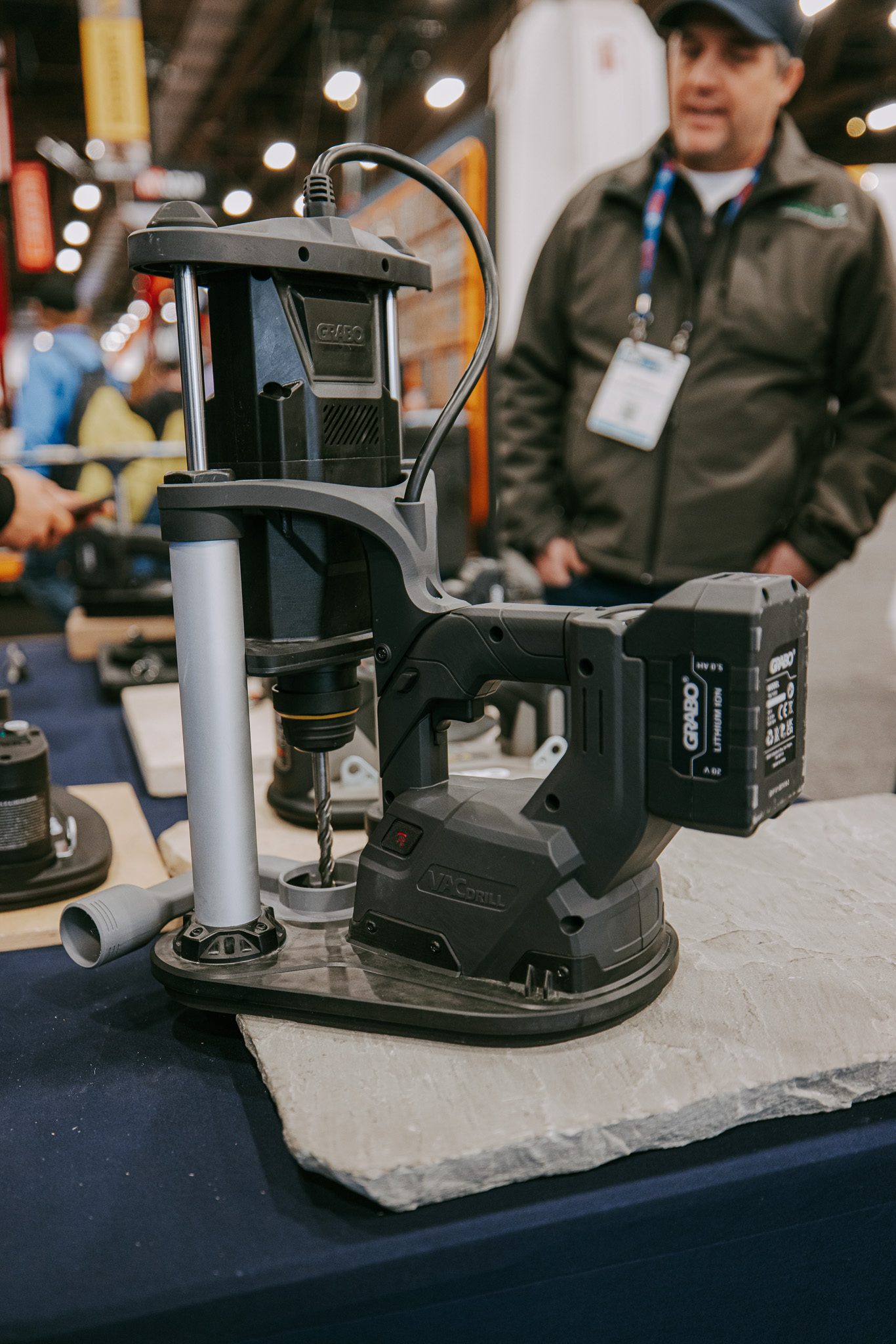
Porous versus non-porous surfaces
If the surface leaks, the vacuum cannot build. Everything else follows from this.
Drilling into concrete
The material the tool was built for.
Drilling into brick and blockwork
Brick is a drilling problem and a sealing problem at the same time.
Drilling into natural stone
Polished granite seals beautifully. Weathered limestone may not seal at all.
Drilling into porcelain and ceramic tile
Perfect for the pad. Merciless to a wandering bit.
Drilling into engineered stone
The best sealing surface in the trade, and the most dangerous dust.
Drilling glass — and attaching to it
Attach with confidence. Drill with extreme care — and never with hammer action.
Drilling steel and metal
On steel you have a choice. That is unusual.
Drilling composite and sandwich panels
The face seals well. The core may not take any load at all.
Plasterboard, drylining and render
The pad can hold far more than the board can.
Cast-in-place versus precast concrete
Precast is made against a mould. That shows.
Painted and coated surfaces
You are attaching to the paint, not to what is underneath it.
Wet, cold and dusty conditions
The same wall behaves differently in February.
Aerated and lightweight block
A material that is mostly air is a poor place to build a vacuum.
Flatness, curvature and steps
Vacuum needs a closed boundary. Geometry decides whether one exists.