VACDRILL vs a handheld rotary hammer
One you hold. One holds itself.
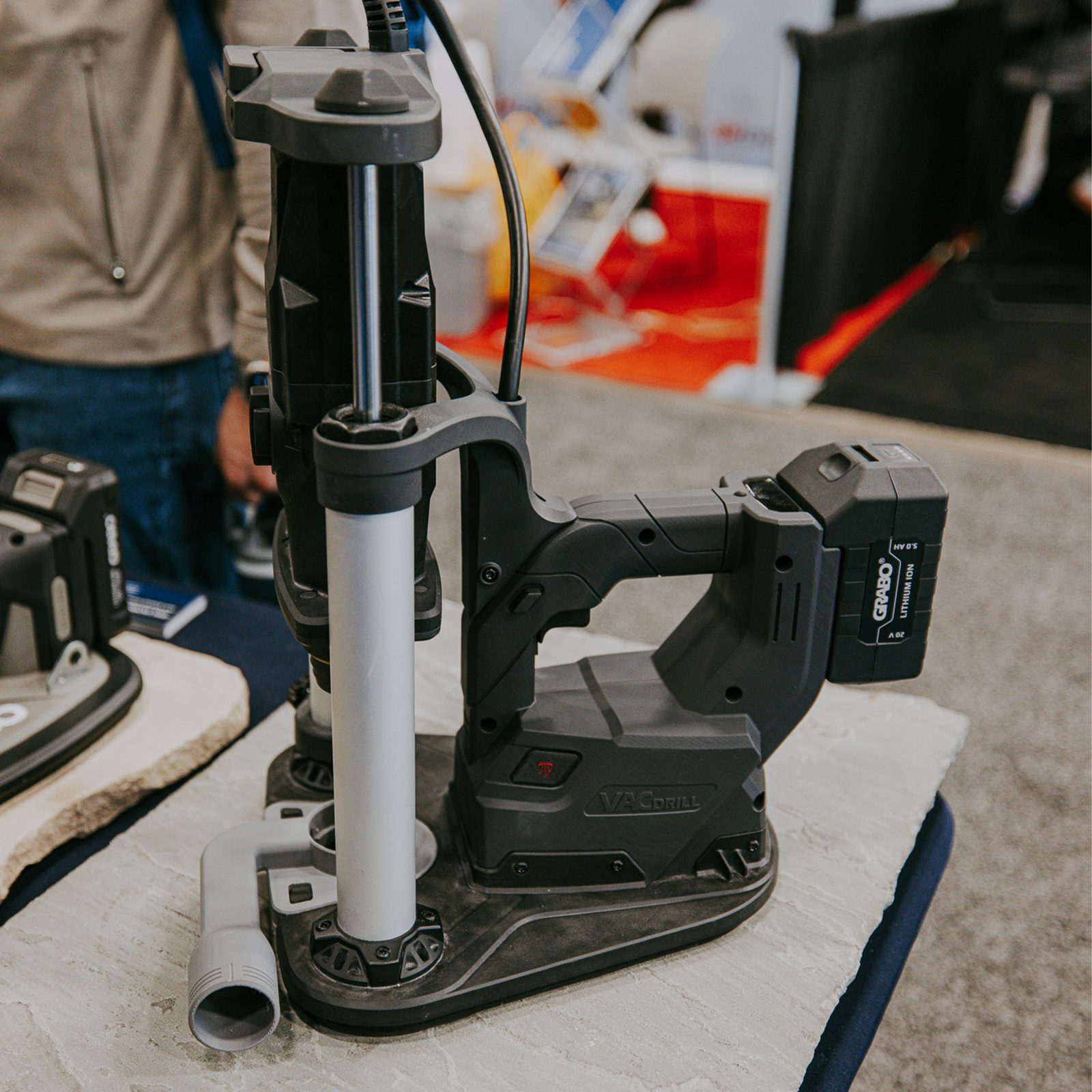
What is identical
Both use an SDS rotary hammer mechanism: piston-driven percussion plus rotation, carbide tooling, the same bits.
What differs
A handheld tool relies on the operator for feed force, axis control and reaction to torque and recoil.
A self-anchoring machine takes all three, so hole geometry stops being a function of operator technique and stamina.
Where handheld still wins
- Speed for a single quick hole in an easy position.
- Surfaces that will not seal — porous block, rough render, friable stone.
- Awkward geometry with no flat pad footprint.
- Weight and bulk when working from a ladder for one fixing.
Where the self-anchoring machine wins
- Repetitive patterns at a controlled depth.
- Overhead and sustained-reach work.
- Anywhere hole accuracy is load-bearing.
- Dust-sensitive environments.
Questions about this
Is the self-anchoring tool always better?
No. For a single hole in an easy position, a handheld rotary hammer is faster and simpler. The self-anchoring machine wins on repetition, accuracy, overhead work and dust control.
Do they use the same bits?
Yes — both use SDS rotary hammer tooling and the same carbide bits, within the machine's diameter and length limits.