Drilling glass — and attaching to it
Attach with confidence. Drill with extreme care — and never with hammer action.
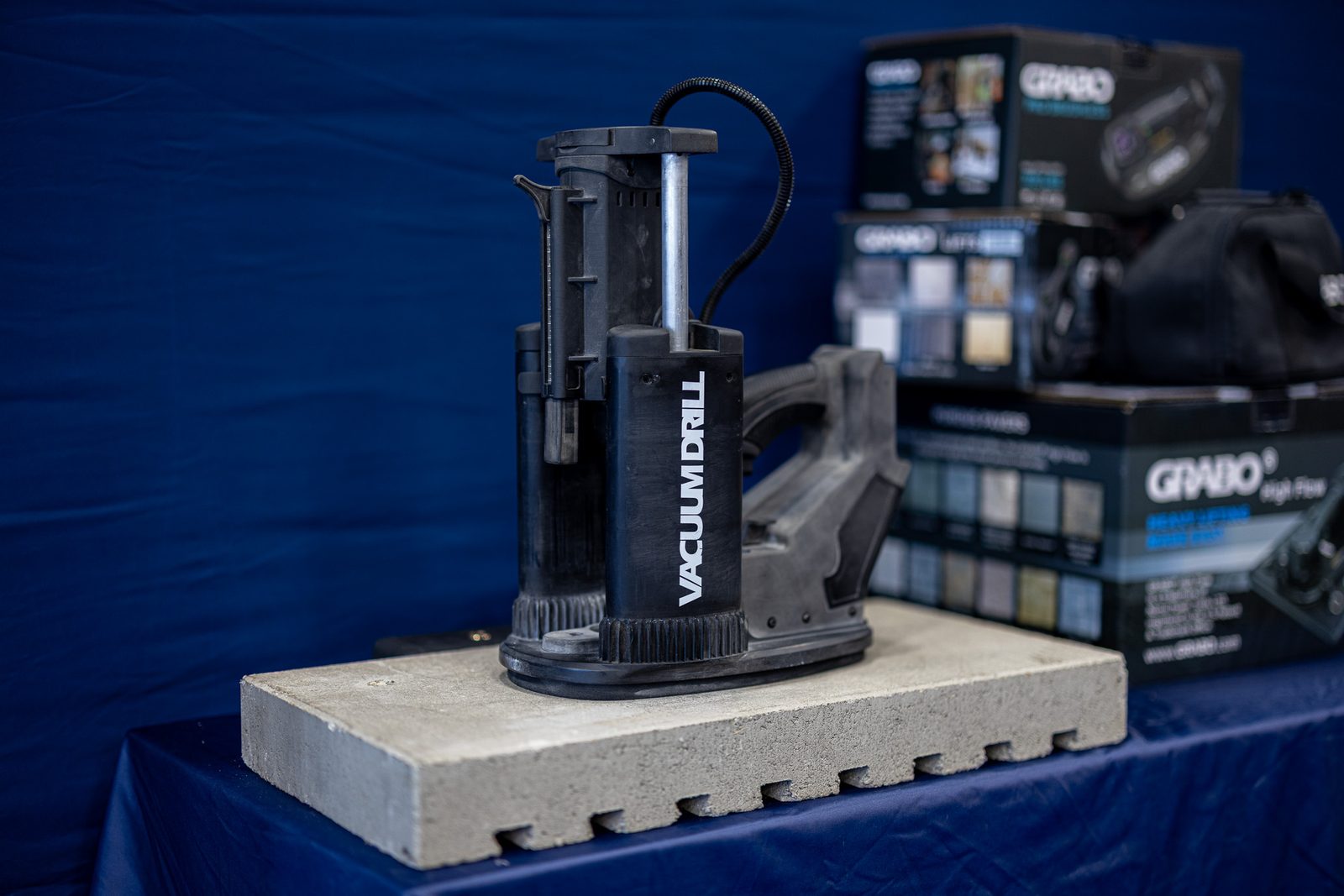
Attachment
Flat, smooth, genuinely non-porous: glass is the reference case for vacuum attachment and the foundation of GRABO's original lifter products.
Drilling glass is not hammer drilling
Glass is drilled with diamond tooling, continuous water cooling, low speed and no percussion. Hammer action will break it.
Toughened and laminated glass cannot be drilled at all after manufacture — toughened glass will shatter completely. Holes must be made before toughening.
Edges and stress
Keep holes well away from edges and from other holes; glass fails from edge and hole-edge stress.
Support the pane fully. An unsupported pane flexes under feed force.
Verify before you start
Confirm whether the glass is annealed, toughened, heat-strengthened or laminated. If you cannot confirm it, do not drill it.
At a glance
| Vacuum sealing | Excellent — the reference surface for vacuum attachment |
|---|---|
| Recommended mode & tooling | Diamond tooling, water-cooled, hammer OFF — never percussion |
| Limits on this tool | 40 mm max bit diameter, 200 mm max length, 145 mm max depth |
Common mistakes on this material
- Any hammer action at all.
- Attempting to drill toughened or laminated glass after manufacture.
- Drilling too close to an edge or another hole.
Questions about this
Can I drill toughened glass with this?
No. Toughened glass cannot be drilled after manufacture — it will shatter completely. Holes must be made before the toughening process. The same applies in practice to most laminated assemblies.
Is glass a good surface to attach to?
It is the best. Glass is flat, smooth and genuinely non-porous, which is exactly what a vacuum pad needs. GRABO's original vacuum lifter products were built around this property.