Vibration, fatigue and the operator
The tool that holds itself is not holding your wrist.
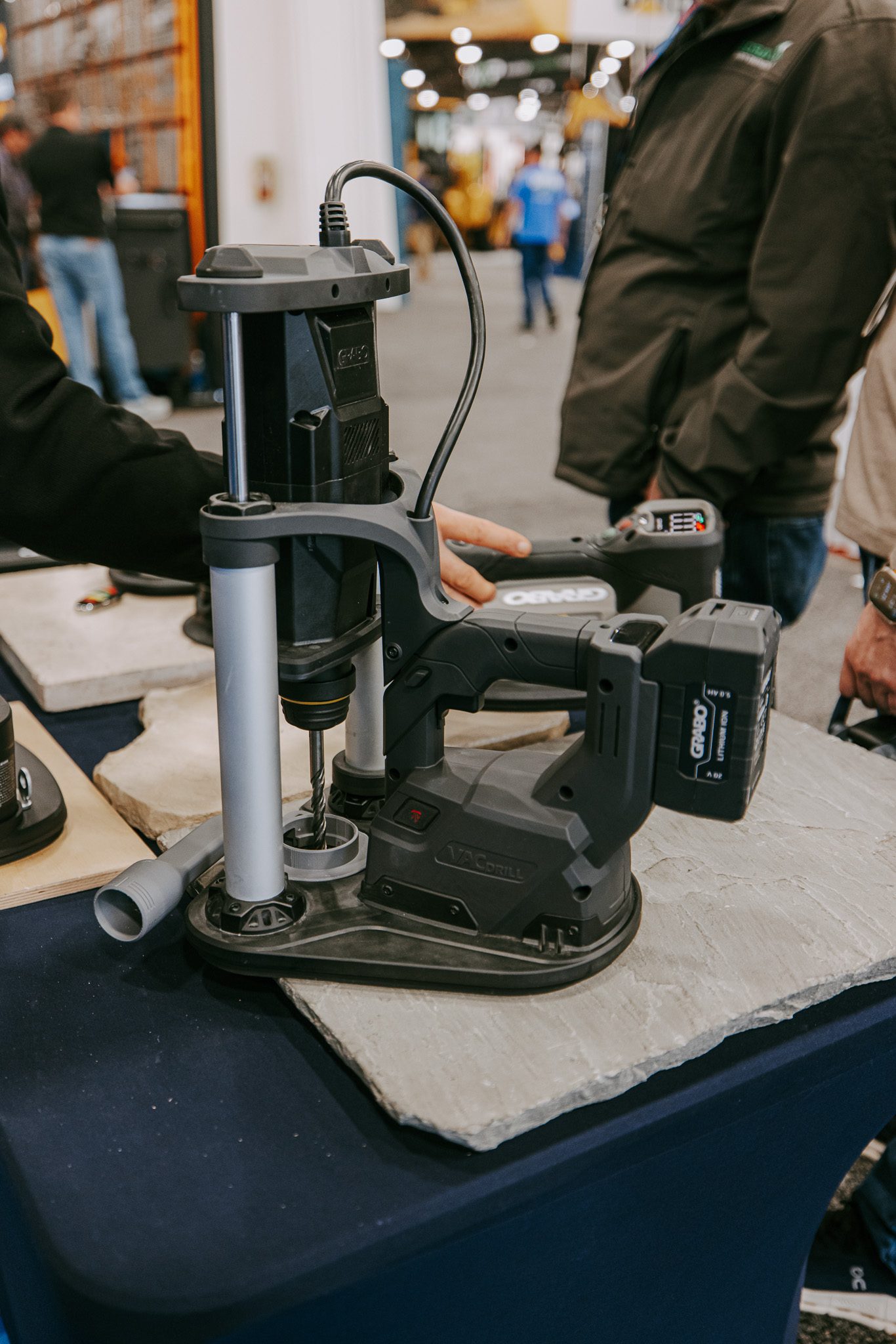
Hand-arm vibration
Prolonged exposure to vibrating tools is associated with hand-arm vibration syndrome. Many jurisdictions require employers to assess and limit daily exposure, typically expressed as an A(8) value.
A tool that is clamped to the work rather than gripped by the operator changes the transmission path fundamentally: for the drilling portion of the cycle, the operator need not be coupled to the tool.
Posture and static load
Overhead and sustained-reach drilling loads the shoulder and neck statically, which fatigues quickly and degrades accuracy long before it becomes an injury.
GRABO's marketing line — less strain, more precision — describes a real relationship: fatigue and accuracy are not independent.
What this does not do
It does not remove the need for hearing protection, eye protection or respiratory assessment.
It does not make an unstable work platform safe. Ladder and access rules still apply.
Questions about this
Does this remove my hand-arm vibration obligations?
No. It changes the coupling between operator and tool during drilling, which is relevant to an exposure assessment, but assessing and controlling exposure remains the employer's legal duty.
Why does fatigue matter for hole quality?
Because accuracy and endurance are not independent. On repetitive overhead work, hole quality typically degrades through a shift as the operator tires — which is a quality problem before it is a health one.