Dust Extraction & Silica Compliance: Capture at Source
You can't wear your way out of a dust problem. Capture is the control the regulations expect — and a sealed base is the most natural place to do it.
Why silica changed the rules
Respirable crystalline silica is the fraction small enough to reach deep lung tissue. Chronic, cumulative exposure causes silicosis and is associated with lung cancer and COPD. The hazard comes from concrete, mortar, brick, stone and engineered stone.
Regulators across the UK/EU, Australia and North America now set occupational exposure limits (often around 0.05 mg/m³ over an 8-hour TWA, with variation by jurisdiction) and require employers to assess and control exposure using the hierarchy of controls. Engineering controls — capture and suppression — sit above RPE.
Drilling, cutting and grinding concrete without controls are recognised high-exposure tasks. The question inspectors ask is not whether you wore a mask but whether you captured at the source.
Capture-at-source and the sealed base
On-tool extraction is the standard engineering control for drilling. Air is drawn from a shroud around the bit before dust becomes airborne, carrying it to a filtered extractor.
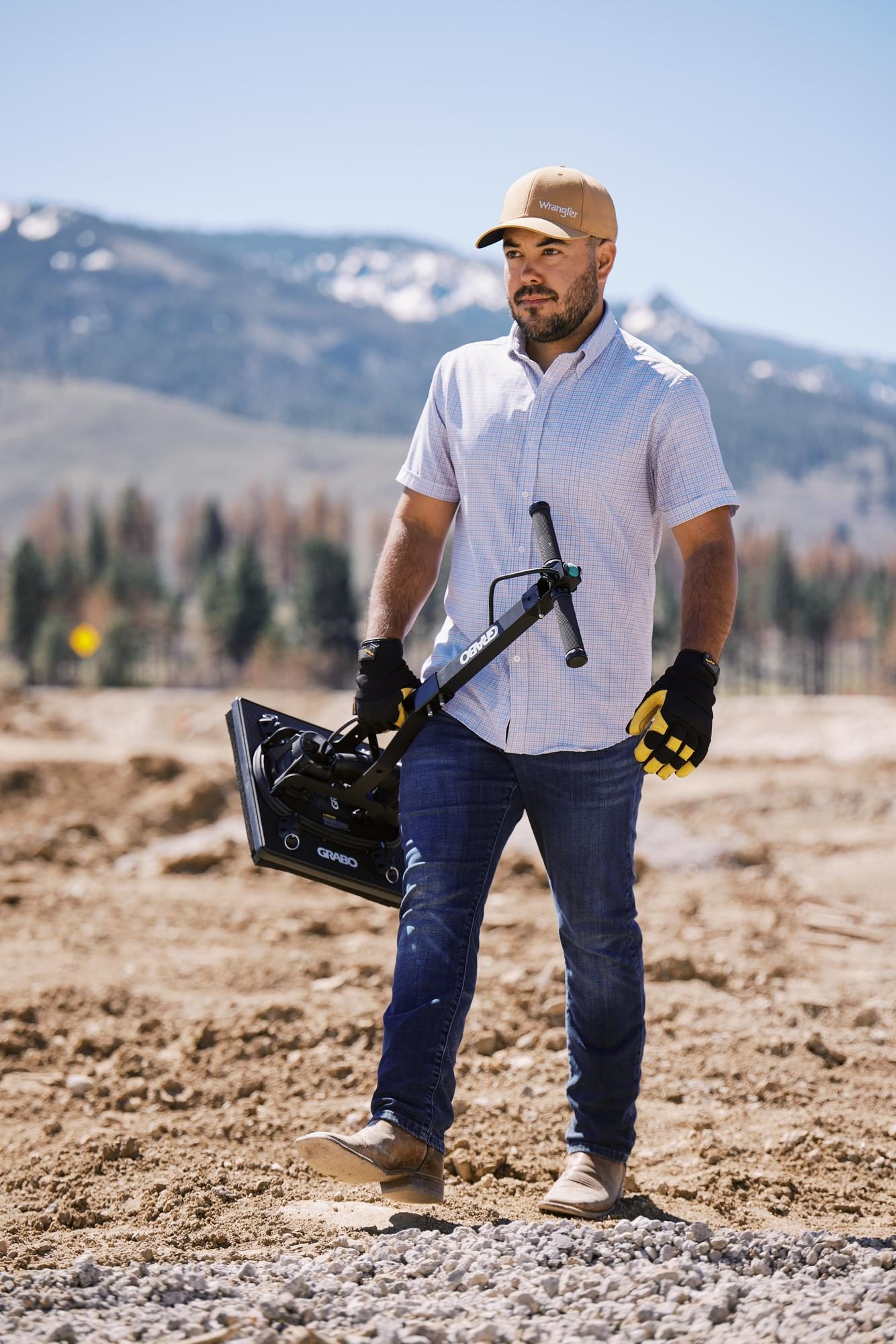
A vacuum-anchored drill has an incidental advantage: the pad seals around the hole, creating a small semi-enclosed volume. With the extractor connected at the dust port, that volume becomes part of the capture circuit. Dust generated at the face has little opportunity to escape laterally before being drawn away.
This is not a substitute for a classified extractor, but it improves the capture efficiency of any extractor connected to it.
M-class, H-class — which extractor?
EN 60335-2-69 classifies extractors by their maximum permissible dust passage: M-class (medium hazard) allows up to 0.1% passage; H-class (high hazard) allows up to 0.005%, with stricter filtration, monitored airflow and dust-free disposal requirements. The class required depends on the dust and the national rule; many authorities require H-class for silica and asbestos work.
Regular filter cleaning, intact hoses, and a flow alarm matter as much as the label. A clogged M-class extractor with a leaking hose captures less in practice than a well-maintained everyday extractor — except only the classified unit meets the legal requirement where classified collection is required.
Consult your national regulation and the anchor/material safety data for the correct class. The article is background, not legal advice.