Overhead & Vertical Drilling: Ergonomics, Vibration and Working From a Ladder
The most dangerous holes are not the deepest. They are the ones drilled above your head, one-handed, from a ladder.
The load overhead
Drilling overhead combines three ergonomic stressors: sustained upward force, vibration transmitted through the hands and arms, and an unstable base (ladder, hop-up or scaffold). Fatigue reduces the operator's ability to hold the bit square, which increases wander, which increases rework, which increases exposure again.
Hand-arm vibration dose accumulates with time-at-vibration. Conventional overhead hammer drilling is among the highest HAV exposures in construction. Grip force amplifies transmission: the harder you must grip to resist torque, the more vibration couples into the hand-arm system.
Lower back loading is also significant: holding a hammer drill overhead forces the lumbar spine into extension while transmitting hammer pulses. Repetitive overhead fixings — lighting tracks, conduit, strut — are where cumulative injury shows earliest.
What self-anchoring changes
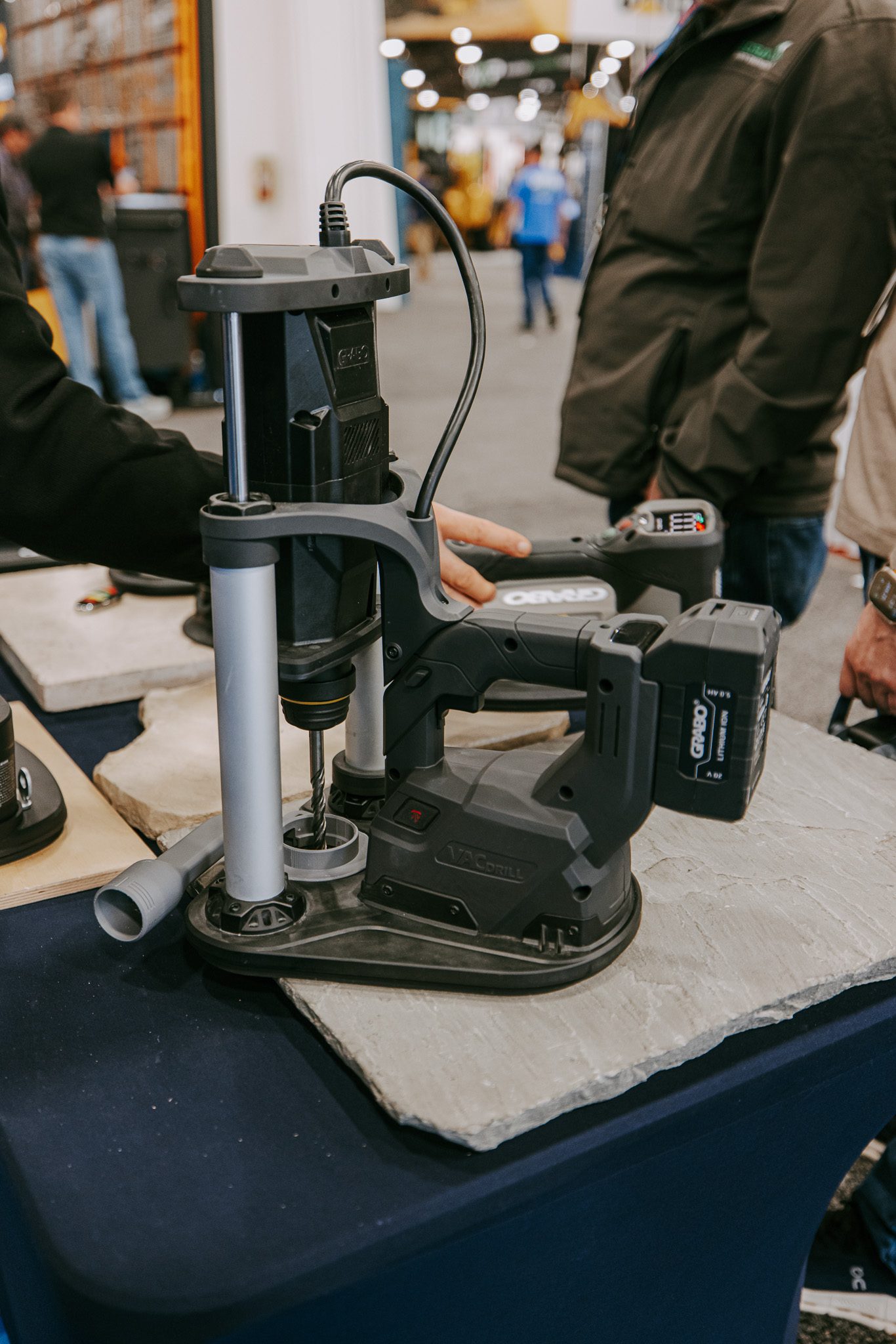
With VACDRILL anchored to the soffit, the pad carries the feed and the column carries the torque reaction. The operator's hands guide the feed handle through a short, controlled stroke rather than bracing the hammer body against recoil with arms extended.
This decouples sustained feed force from posture. A person standing upright can position, anchor, then feed without holding the hammer's weight at arm's length. The result is lower grip force, lower HAV coupling and lower lumbar demand for the same hole.
The machine does not eliminate overhead work controls — edge protection, exclusion zones and suitable access remain required — but it changes the task from a two-arm physical contest to a one-person, two-step operation.