A short history of vacuum lifting
The idea is old. Making it portable and powered is recent.
Industrial origins
Vacuum lifting began as fixed industrial equipment for handling glass and sheet material, where the workpiece is smooth, non-porous and awkward to grip mechanically.
Early devices were large, shop-based and powered from compressed air or mains electricity.
The portable, powered shift
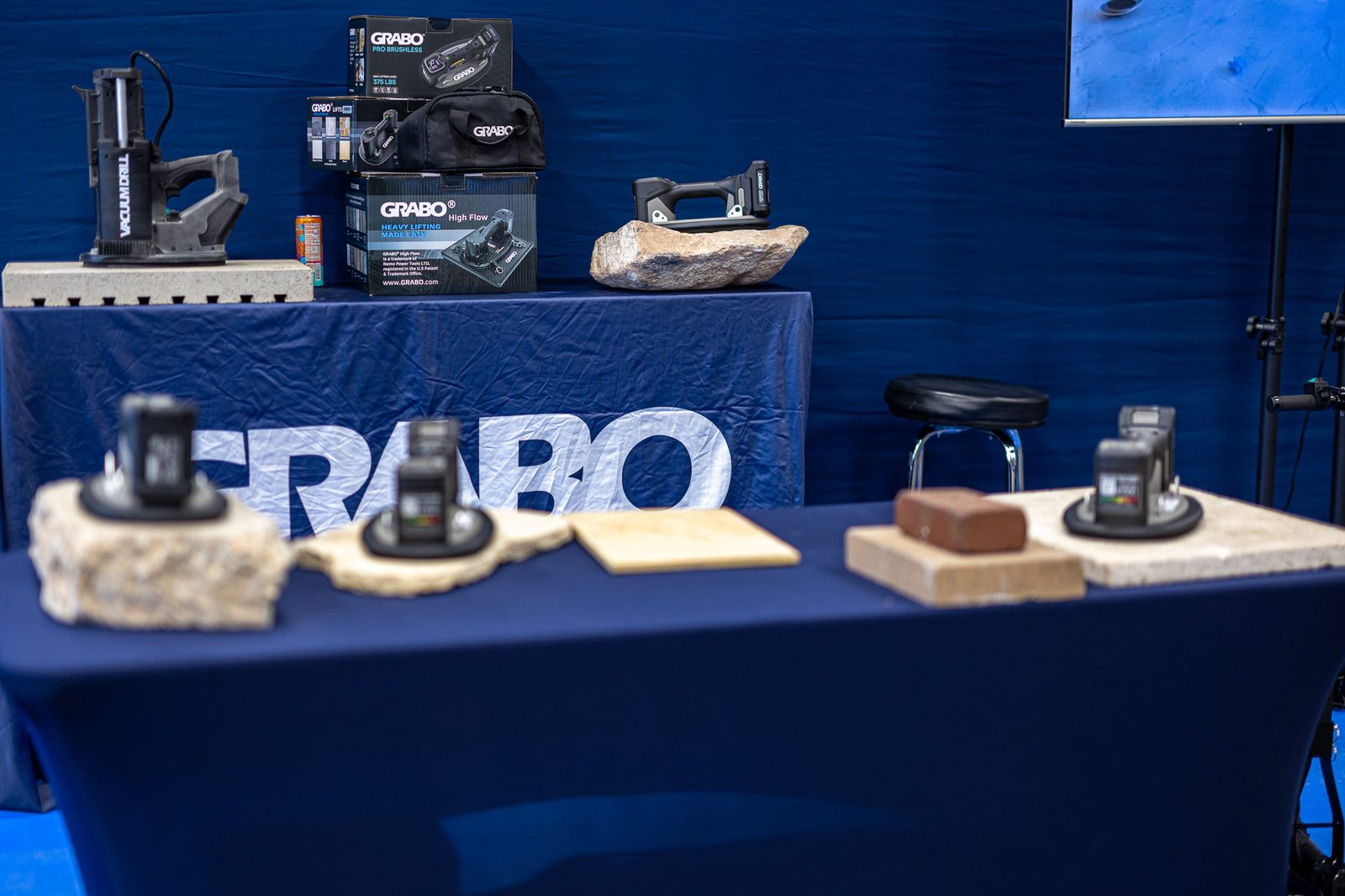
The significant change was putting a battery-powered pump into a hand-portable cup. That turned a fixed-plant capability into a site tool, and it is the product category GRABO is best known for — portable electric vacuum lifters.
A powered pump is what allows attachment to imperfect construction surfaces rather than only to glass.
From carrying to anchoring
Once you can reliably clamp a machine to a wall, the obvious next move is to attach something that does work rather than something that carries. That is the step the self-holding, self-driving drilling patent describes.
Why it took a while
Anchoring a hammer drill is harder than lifting a panel: cyclic reaction loads, torque and vibration all attack the seal. See vacuum anchoring.
Questions about this
What made portable vacuum tools possible?
Putting a battery-powered pump into a hand-portable cup. That turned a fixed-plant capability into a site tool and allowed attachment to imperfect construction surfaces rather than only to glass.
How did lifting become drilling?
Once you can reliably clamp a machine to a wall, you can attach something that does work rather than something that carries. That is the step the self-holding, self-driving patent describes.