Aerated and lightweight block
A material that is mostly air is a poor place to build a vacuum.
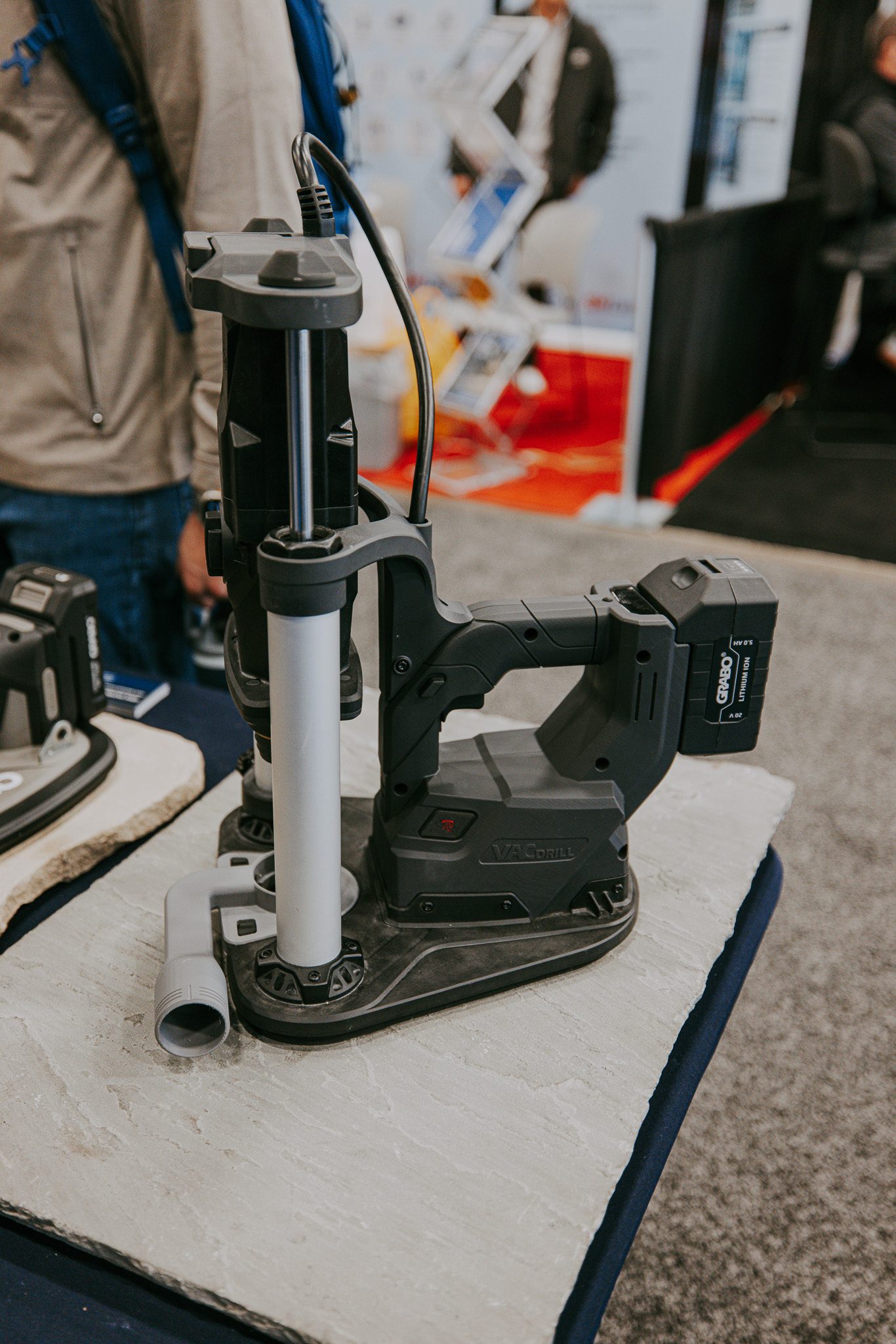
Why it is difficult
Autoclaved aerated concrete is a closed-and-open cell foam. It is porous throughout, so air paths run through the material itself and a pad cannot establish a sealed boundary.
It is also low strength, so even a partial vacuum may damage the surface.
Drilling it
AAC cuts easily and should generally be drilled without hammer action — percussion crumbles it and produces a grossly oversized, useless hole.
Sharp tooling and low feed give the cleanest result.
Fixings
AAC requires dedicated anchors designed for the material. Standard masonry plugs perform very poorly.
Realistic expectation
Treat bare AAC as unsuitable for vacuum attachment. A sound render or coating over it may change that — test it.
At a glance
| Vacuum sealing | Poor — porous by construction |
|---|---|
| Recommended mode & tooling | Sharp bit, hammer OFF |
| Limits on this tool | 40 mm max bit diameter, 200 mm max length, 145 mm max depth |
Common mistakes on this material
- Using percussion, which crumbles it into an oversized hole.
- Expecting a bare AAC surface to seal at all.
- Using standard masonry plugs instead of AAC-specific anchors.