Drilling into concrete
The material the tool was built for.
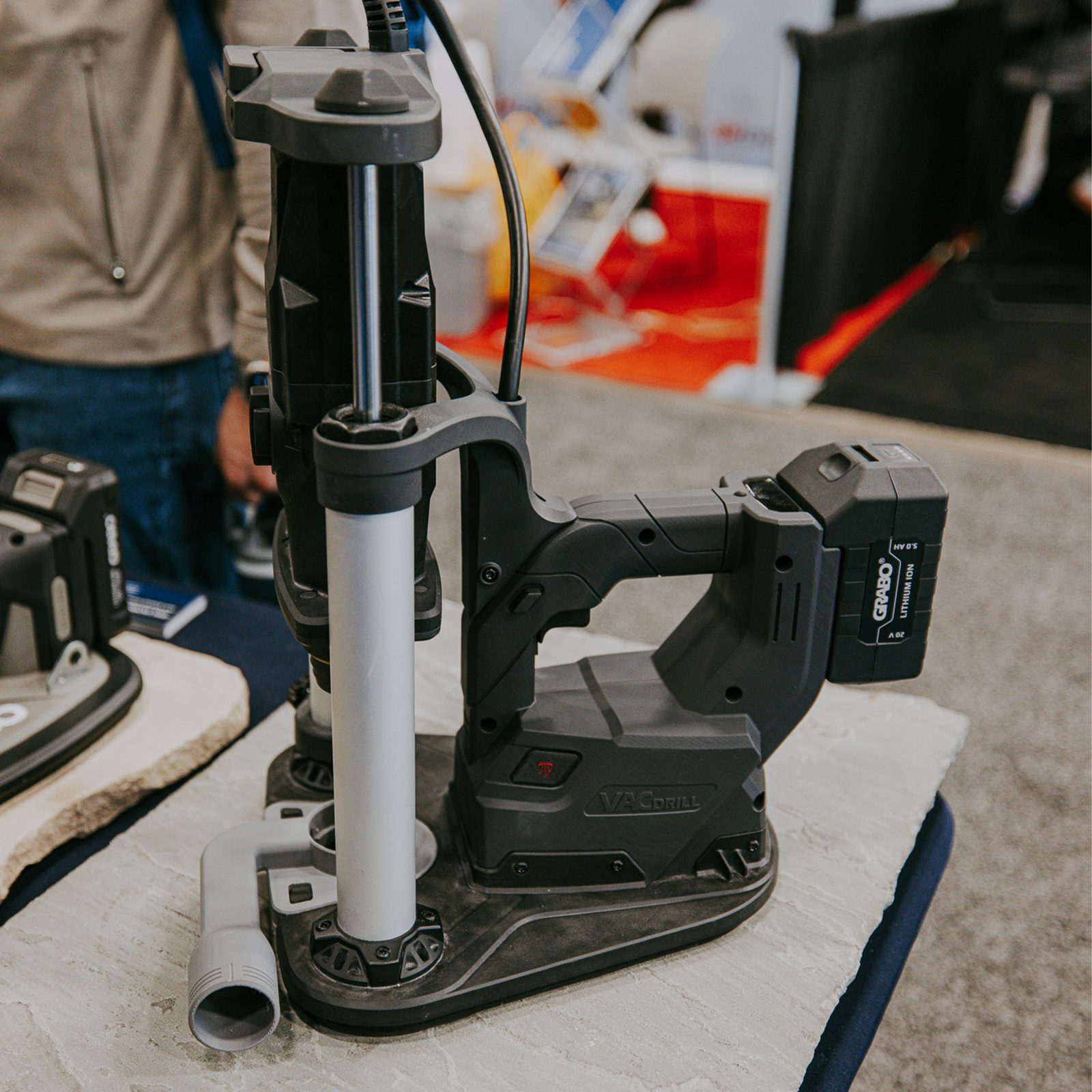
The substrate
Cured structural concrete is dense, strong and — once swept — generally seals well, particularly if it is power-trowelled, formed against steel or sealed.
Its complication is heterogeneity: aggregate, voids and reinforcement are distributed unpredictably, which is exactly what makes freehand bits wander.
Drilling it
Rotary hammer with SDS carbide, hammer action on. The VACDRILL takes bits to 40 mm diameter and 200 mm length, drilling to 145 mm deep.
A sudden increase in resistance usually means aggregate or rebar. Do not force it — see hitting rebar.
Attachment notes
Sweep the pad area. Concrete dust is the most common cause of a failed seal on exactly the surface you most want to attach to.
Green concrete, curing compounds and form release agents all reduce sealing; so does a broomed finish.
Dust
Concrete is a primary silica source. Use extraction — see silica dust rules.
At a glance
| Vacuum sealing | Good once swept — better if trowelled or sealed |
|---|---|
| Recommended mode & tooling | Rotary hammer, SDS carbide, hammer ON |
| Limits on this tool | 40 mm max bit diameter, 200 mm max length, 145 mm max depth |
Common mistakes on this material
- Attaching without sweeping. Concrete dust is the classic seal-killer.
- Forcing through what is actually rebar.
- Drilling green concrete and expecting mature-concrete behaviour.
Questions about this
Can the VACDRILL attach to rough broomed concrete?
Often, but with reduced holding force. A broomed finish is textured, so the pad has more leak paths than on a trowelled or formed face. Sweep it, attach, listen to the pump and test by hand before trusting it.
Does drilling concrete always need dust extraction?
Concrete is a primary source of respirable crystalline silica, and in most jurisdictions employers must control exposure using engineering controls first. On-tool extraction is the standard control for drilling.