Porous versus non-porous surfaces
If the surface leaks, the vacuum cannot build. Everything else follows from this.
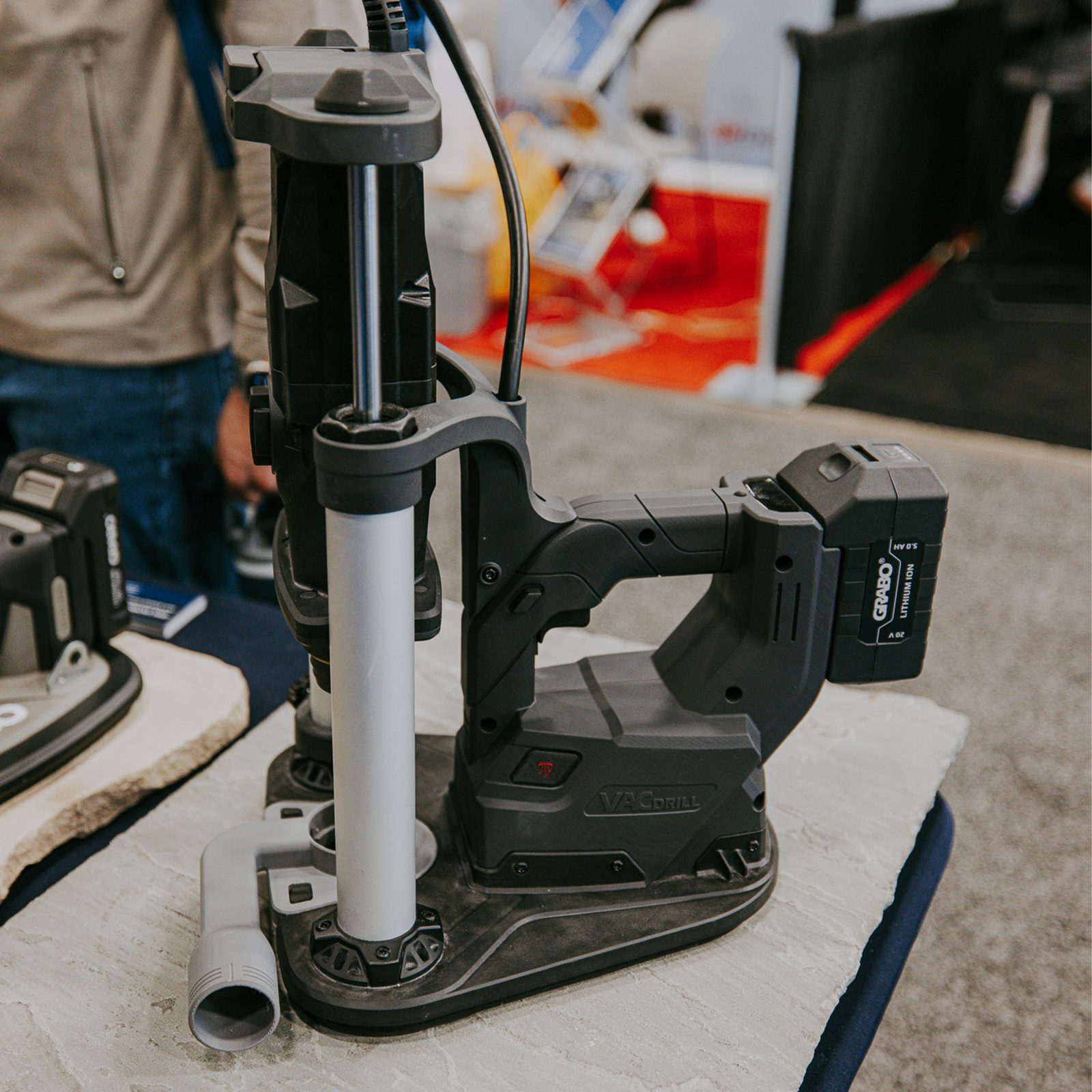
The distinction that matters
GRABO quotes up to 45 kgf of holding force on non-porous surfaces at 0.8 bar. A non-porous surface has no connected air path through it, so once the pump evacuates the space under the pad, the only way air returns is past the seal.
A porous surface — open-textured block, unsealed brick, soft stone, bare timber — contains a network of connected voids. Air flows through the material itself, so the pump is fighting a distributed leak that no seal can close.
Reliably non-porous
Glass, polished natural stone, glazed porcelain, sealed or power-trowelled concrete, painted or coated steel, smooth composite panels, most finished metals.
Problematic or unsuitable
Open-texture concrete block, unsealed or soft brick, weathered or friable stone, rough sawn timber, sprayed fireproofing, insulation board, heavily textured render.
The middle ground
Many real surfaces sit between the two. A powered pump can often hold on a moderately porous surface because it continuously replaces leaking air — this is exactly why powered attachment exists and hand pumps are limited, and why a High Flow variant is offered.
Test before you rely on it, and expect less than the rated figure.
How to test in ten seconds
Attach on a clean patch and listen to the pump. If it settles and stays quiet, the surface is sealing. If it cycles constantly, it is leaking.
Then try to move the tool by hand. If it shifts, the surface is not suitable.
At a glance
| Vacuum sealing | Varies — this is the deciding property |
|---|---|
| Recommended mode & tooling | Depends on material |
| Limits on this tool | 40 mm max bit diameter, 200 mm max length, 145 mm max depth |
Common mistakes on this material
- Assuming a surface is non-porous because it looks smooth. Test it.
- Relying on a rated figure on a surface that has not been checked.
- Cleaning a porous surface and expecting cleaning to fix porosity.