Drilling into brick and blockwork
Brick is a drilling problem and a sealing problem at the same time.
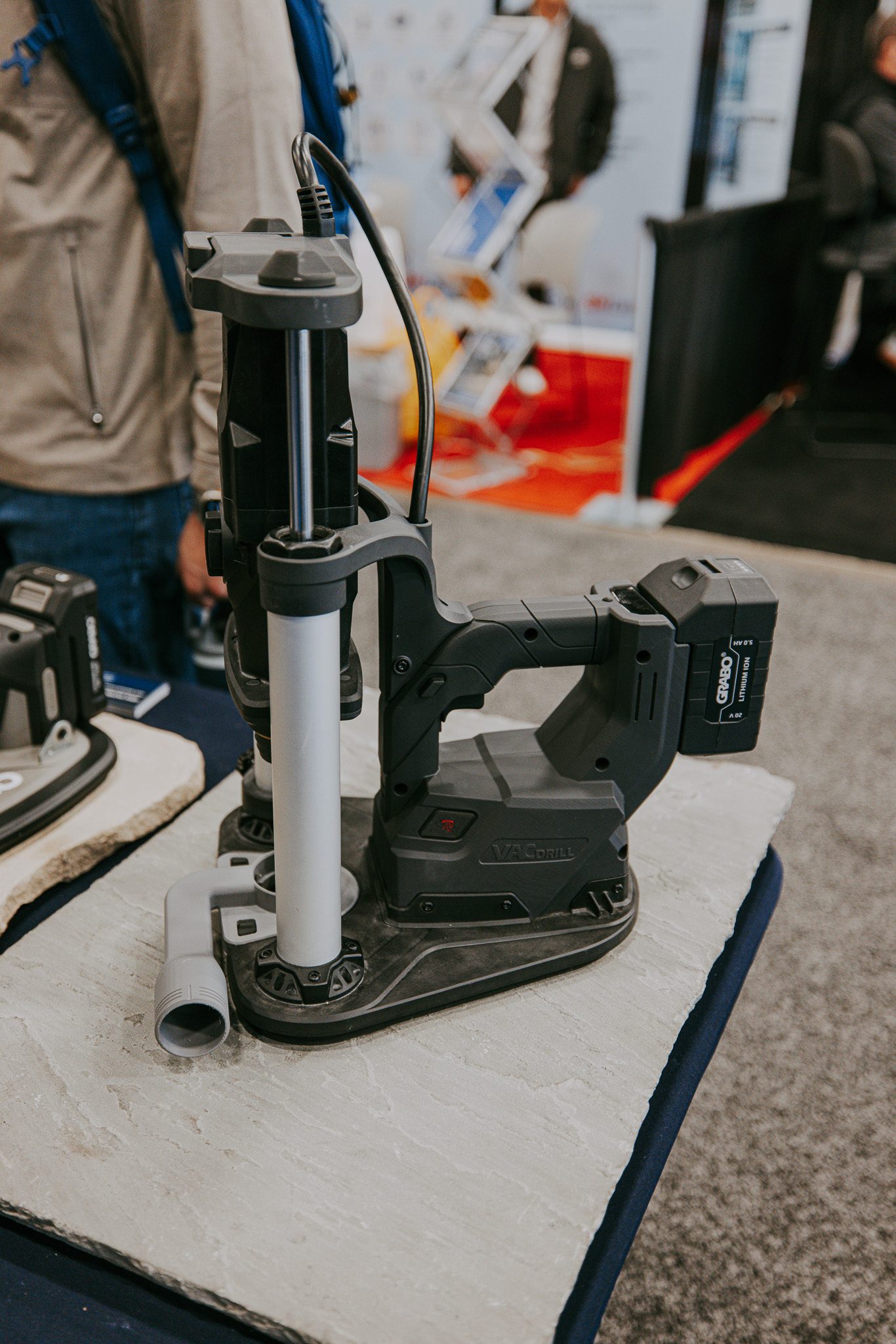
The substrate
Fired clay brick varies from dense engineering brick to soft, absorbent stock brick. Concrete block ranges from dense aggregate block to lightweight aerated block that is essentially foam.
Mortar joints are softer than the units and are also steps in the surface.
Sealing
Dense, smooth engineering brick and painted or rendered blockwork can seal acceptably. Open-textured or aerated block generally cannot — it is porous by construction.
Avoid spanning a mortar joint with the pad where possible; a recessed joint is an open leak path.
Drilling
Hammer action suits fired brick and dense block. Reduce or stop percussion in soft or aerated block, which crumbles rather than fractures and gives an oversized, weak hole.
Never drill into the joint when the fixing is specified for the unit, or vice versa.
Fixing choice
Anchor performance in masonry is far more variable than in concrete. Follow the anchor manufacturer's base-material tables and test where capacity matters.
At a glance
| Vacuum sealing | Mixed — dense brick fair, aerated block poor |
|---|---|
| Recommended mode & tooling | Hammer ON for fired brick and dense block; reduce or off for soft/aerated |
| Limits on this tool | 40 mm max bit diameter, 200 mm max length, 145 mm max depth |
Common mistakes on this material
- Spanning a recessed mortar joint with the pad — an open leak path.
- Using hammer action in aerated block and producing an oversized, useless hole.
- Applying concrete anchor data to masonry.