Drilling into natural stone
Polished granite seals beautifully. Weathered limestone may not seal at all.
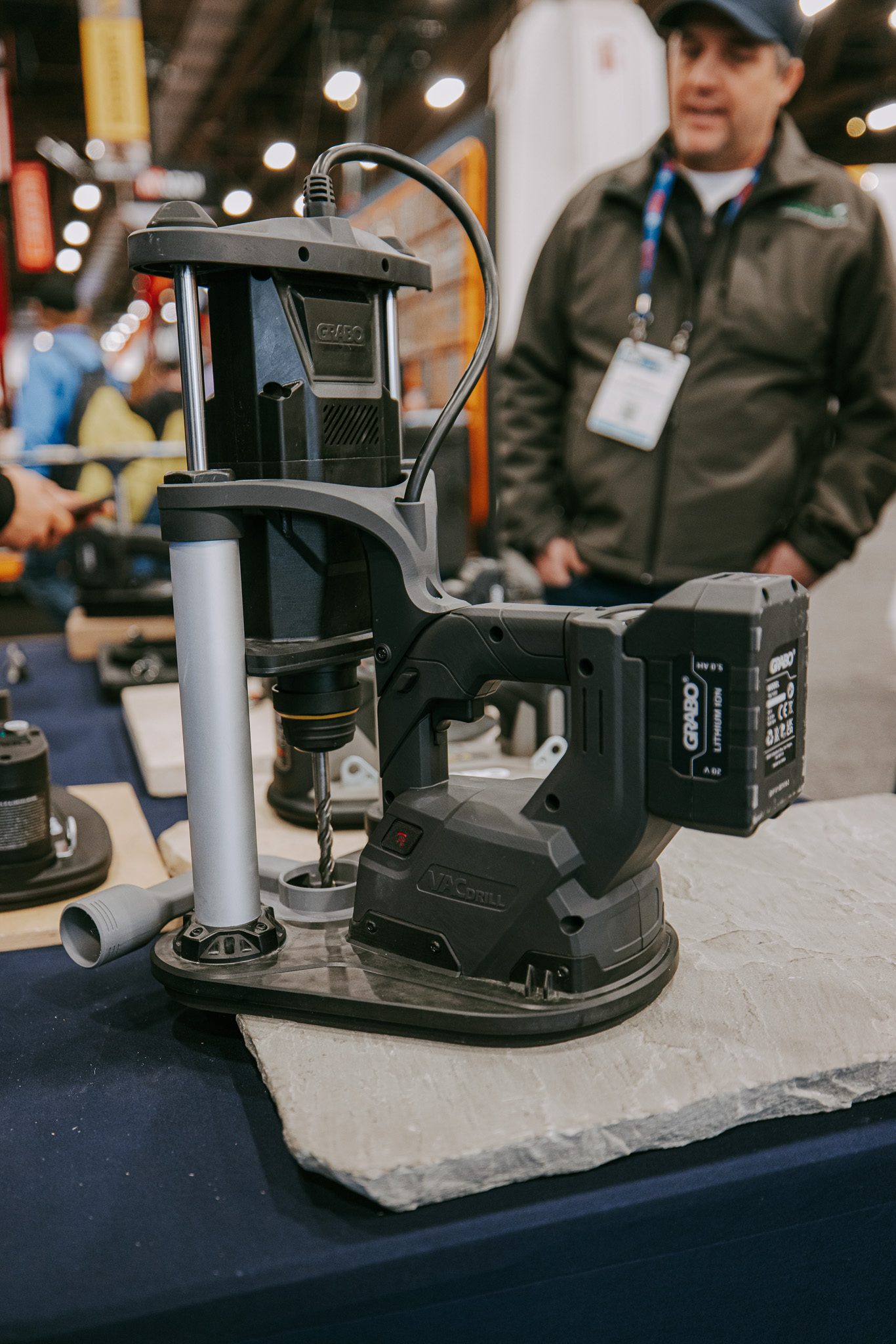
The range
Granite and dense marble are hard, dense and — when polished — excellent vacuum surfaces.
Limestone, sandstone and travertine are softer and more porous, sometimes markedly so. Weathered or historic stone can be friable.
Drilling
Dense stone is generally drilled with diamond tooling and no percussion. Hammer action on brittle polished stone risks chipping and cracking.
Keep feed steady and let the tooling cut. Heat is the enemy of diamond tooling.
Attachment
Polished faces are ideal. Honed, riven, flamed or bush-hammered finishes are progressively worse.
On historic or friable stone, consider whether pad loading is acceptable at all — see restoration and heritage.
Value
Stone is expensive and often irreplaceable in a matched batch. A fixed drilling axis is cheap insurance against a scrapped slab.
At a glance
| Vacuum sealing | Excellent when polished, poor when weathered or riven |
|---|---|
| Recommended mode & tooling | Diamond tooling, hammer OFF |
| Limits on this tool | 40 mm max bit diameter, 200 mm max length, 145 mm max depth |
Common mistakes on this material
- Using percussion on brittle polished stone.
- Attaching to friable or historic stone without testing.
- Letting diamond tooling overheat.