Drilling into engineered stone
The best sealing surface in the trade, and the most dangerous dust.
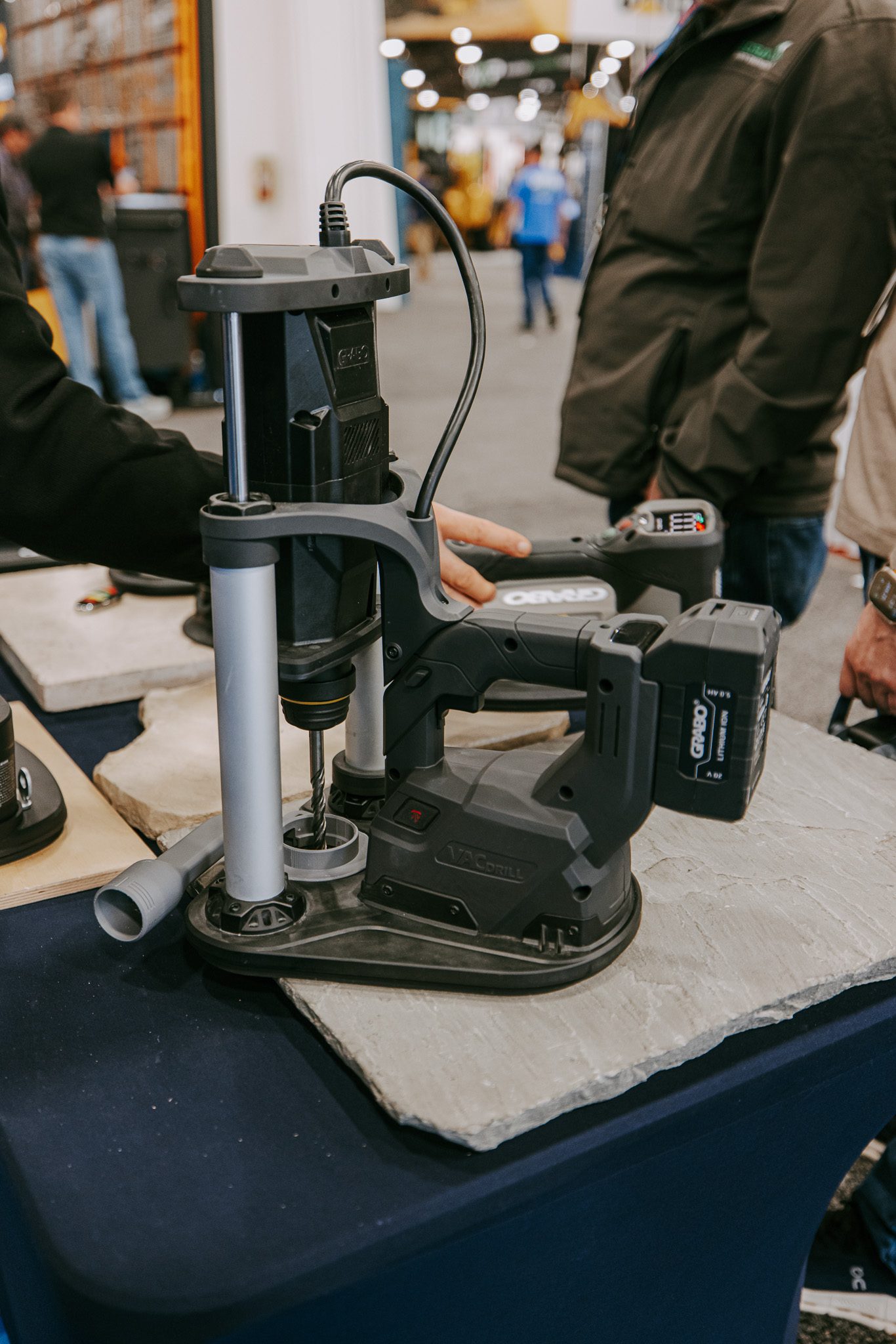
The substrate
Engineered quartz is a resin-bound composite, dense, uniform and polished — an excellent vacuum surface with none of the porosity variation of natural stone.
The health issue
Engineered stone typically contains a far higher proportion of crystalline silica than natural stone. It has been linked to severe, accelerated silicosis among fabricators, and some jurisdictions have moved to prohibit or heavily restrict its dry processing.
Read engineered stone and silica before working it.
Drilling
Diamond tooling, no percussion, wet or fully extracted.
Resin content means heat matters: overheating scorches and can discolour the material.
Attachment
Straightforward on a polished face. Keep clear of unsupported overhangs and cut-outs, which is where these slabs break.
At a glance
| Vacuum sealing | Excellent — the best sealing surface in the trade |
|---|---|
| Recommended mode & tooling | Diamond tooling, hammer OFF, extracted or wet |
| Limits on this tool | 40 mm max bit diameter, 200 mm max length, 145 mm max depth |
Common mistakes on this material
- Any dry processing without extraction. This material's dust is the serious one.
- Overheating and scorching the resin binder.
- Attaching over an unsupported cut-out or overhang.
Questions about this
Why is engineered stone dust more dangerous than natural stone?
Engineered quartz typically contains a far higher proportion of crystalline silica than most natural stone. That higher content, combined with high-energy processing, has driven outbreaks of accelerated silicosis among fabricators.
Can I dry-drill engineered stone with extraction?
Drilling is lower-exposure than cutting or grinding, but it is not zero. Use extraction or water suppression, and check the rules in your jurisdiction — some have introduced prohibitions or licensing for engineered stone work.