Vacuum anchoring versus magnetic drilling
Same idea, different physics, different materials.
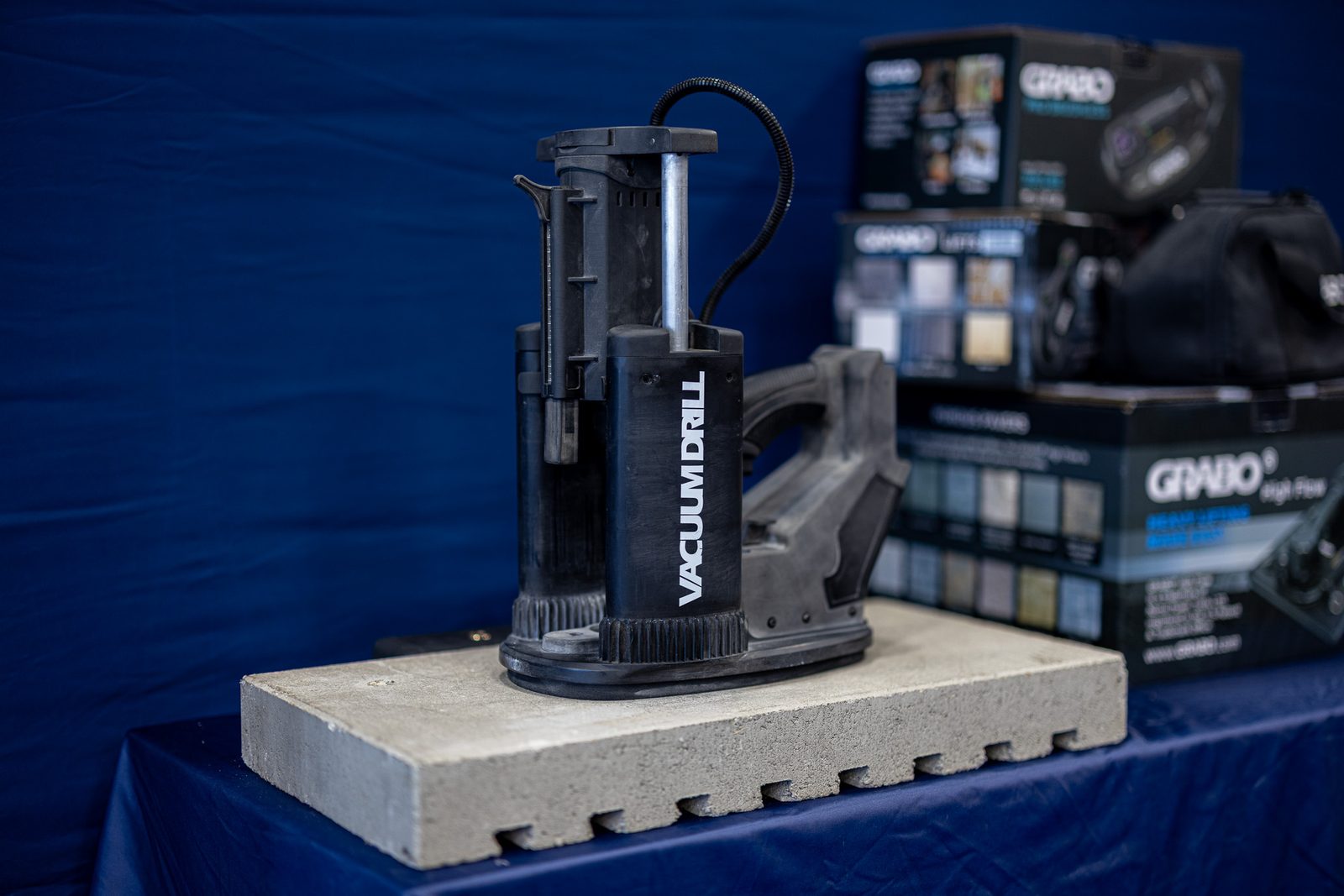
What a mag drill does
A magnetic base drill clamps itself to ferrous steel with an electromagnet, then feeds a cutter under machine control. It is a mature, trusted category, and for structural steel it remains excellent.
Its limitation is inherent: it needs ferromagnetic material of sufficient thickness. On concrete, brick, stone, glass or aluminium it has nothing to grip.
What vacuum anchoring adds
Vacuum attachment does not care whether the substrate is magnetic. It cares whether the surface is sufficiently smooth and non-porous to seal.
That inverts the material map: a mag drill is at home on steel and helpless on stone; a vacuum-anchored drill is at home on dense masonry, stone, glass and finished concrete.
Choosing
- Structural steel, thick section: magnetic base.
- Concrete, stone, brick, tile, glass, composite panels: vacuum anchoring.
- Painted or coated steel: consider both — coating thickness hurts magnets, while a smooth coating may actually seal well.
- More at VACDRILL vs magnetic drill.
Questions about this
Is vacuum anchoring as strong as a magnetic base?
They are not directly comparable, because they work on different materials. The practical question is not which is stronger but which can grip your substrate at all.
Can I use a magnetic drill on stainless steel?
Most stainless grades are weakly magnetic or non-magnetic, so a magnetic base performs poorly or not at all. Vacuum attachment does not care about magnetic properties.