VACDRILL vs magnetic drill
Both anchor the machine. Only one works on concrete.
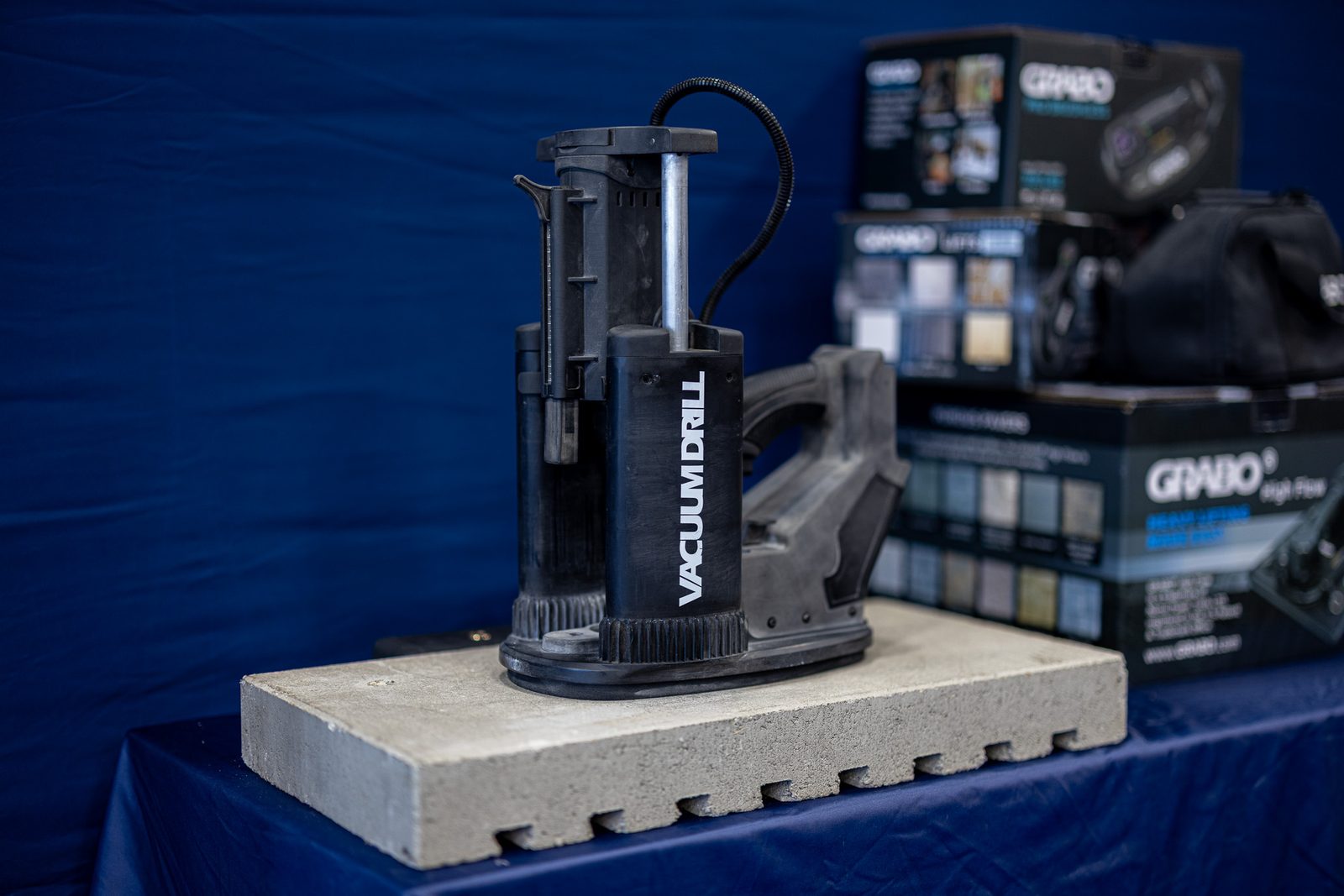
The shared idea
Both categories exist for the same reason: a machine that anchors itself drills better than a person holding a tool. Both fix the axis and provide controlled feed.
The dividing line is the substrate
A magnetic base needs ferromagnetic steel of adequate thickness. It is superb on structural steel and useless on anything else.
Vacuum needs a sufficiently smooth, non-porous surface. It works on concrete, stone, glass, tile, composite and non-ferrous metal — and struggles on porous or rough material.
Choosing
- Thick structural steel: magnetic.
- Concrete, masonry, stone, tile, glass, composites: vacuum.
- Coated or thin steel: vacuum is often better, since coating thickness weakens magnets while a smooth coating seals well.
- Aluminium and stainless: vacuum, because magnets do nothing.
Failure behaviour
A mag drill fails if power is lost, which is why safety chains are standard practice.
A vacuum attachment usually degrades gradually as a leak develops — see failure modes.
Questions about this
Can a magnetic drill work on concrete?
No. A magnetic base needs ferromagnetic steel of adequate thickness. On concrete, stone, glass or aluminium it has nothing to grip.
Which is better on painted steel?
Often vacuum. Coating thickness increases the air gap and weakens a magnet, while a smooth, well-bonded coating can seal very well — provided its adhesion is sound.