VACDRILL for electricians
Overhead fixings without bracing a hammer drill above your head.
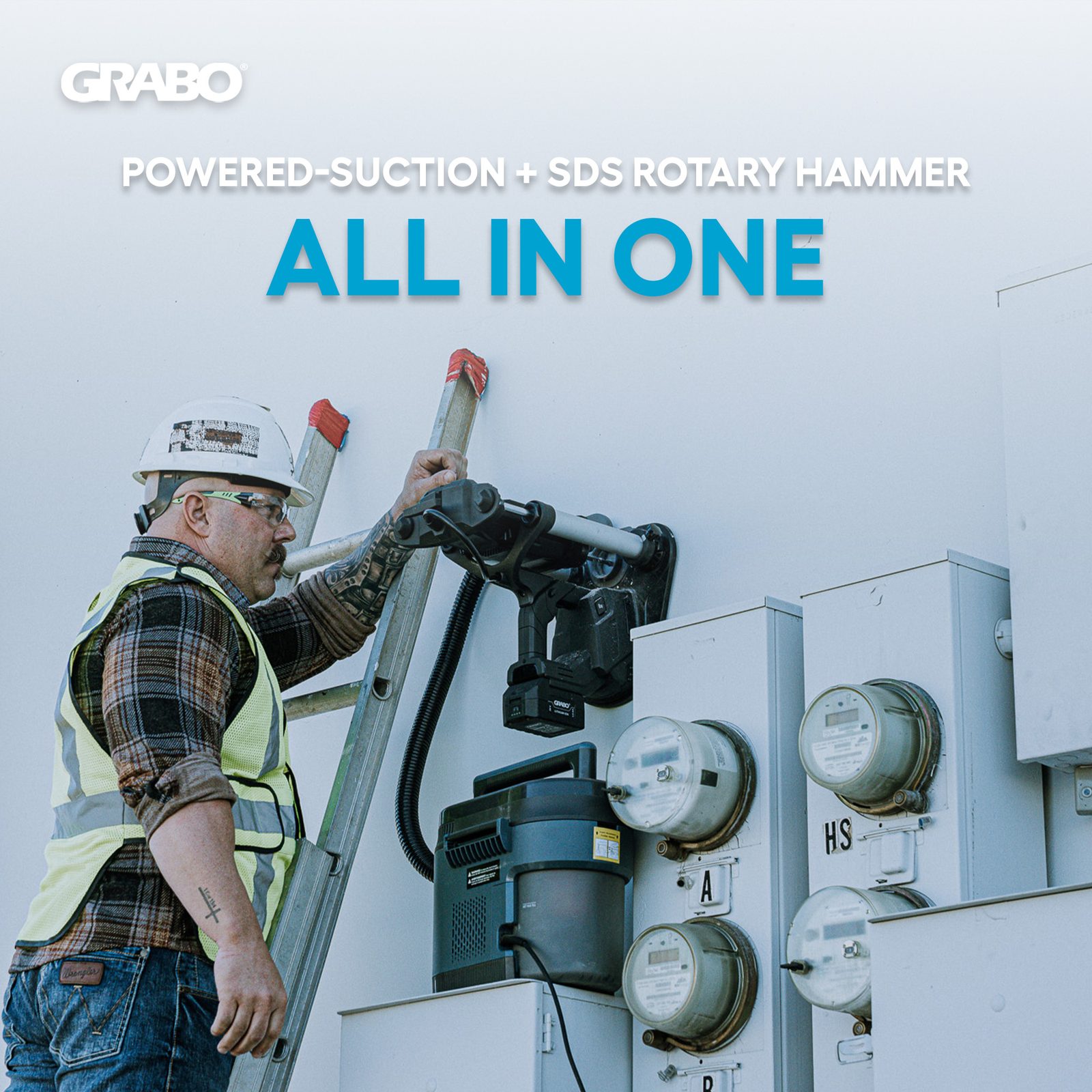
The job
Electrical first fix is a long sequence of small fixings: strut channel, cable tray, conduit saddles, back boxes, luminaire supports. Much of it is overhead, much of it from a ladder or platform, and almost all of it into concrete, block or brick.
Where the tool fits
This is the clearest case for a self-anchoring drill. The machine holds itself to the soffit or wall and drives its own feed, so the operator is positioning rather than bracing — see overhead drilling.
Consistent depth matters when a run of identical anchors has to take the same torque.
Working from access equipment
A tool that supports itself reduces — but does not remove — the loads that make ladder work risky. Ladder and access rules still apply in full.
Never stand directly beneath the anchored machine.
Live services
Scanning before drilling is unchanged: cover meters, rebar scanners and cable detectors are still required practice. A self-anchoring drill does not know what is behind the surface.
Typical holes on this work
- Strut channel and unistrut fixings into soffits and walls.
- Cable tray and basket supports.
- Conduit saddles and back boxes.
- Luminaire and containment drops.
Before you attach on this substrate
- Cable-detect before every hole. A self-anchoring drill has no idea what is behind the surface.
- On painted block, check the coating is sound — you are trusting its adhesion.
- Overhead: prepare the surface more carefully than you would on a wall, and stand out of the fall line.