VACDRILL for glaziers and glass fabricators
Non-porous, flat and smooth: the best case for the seal.
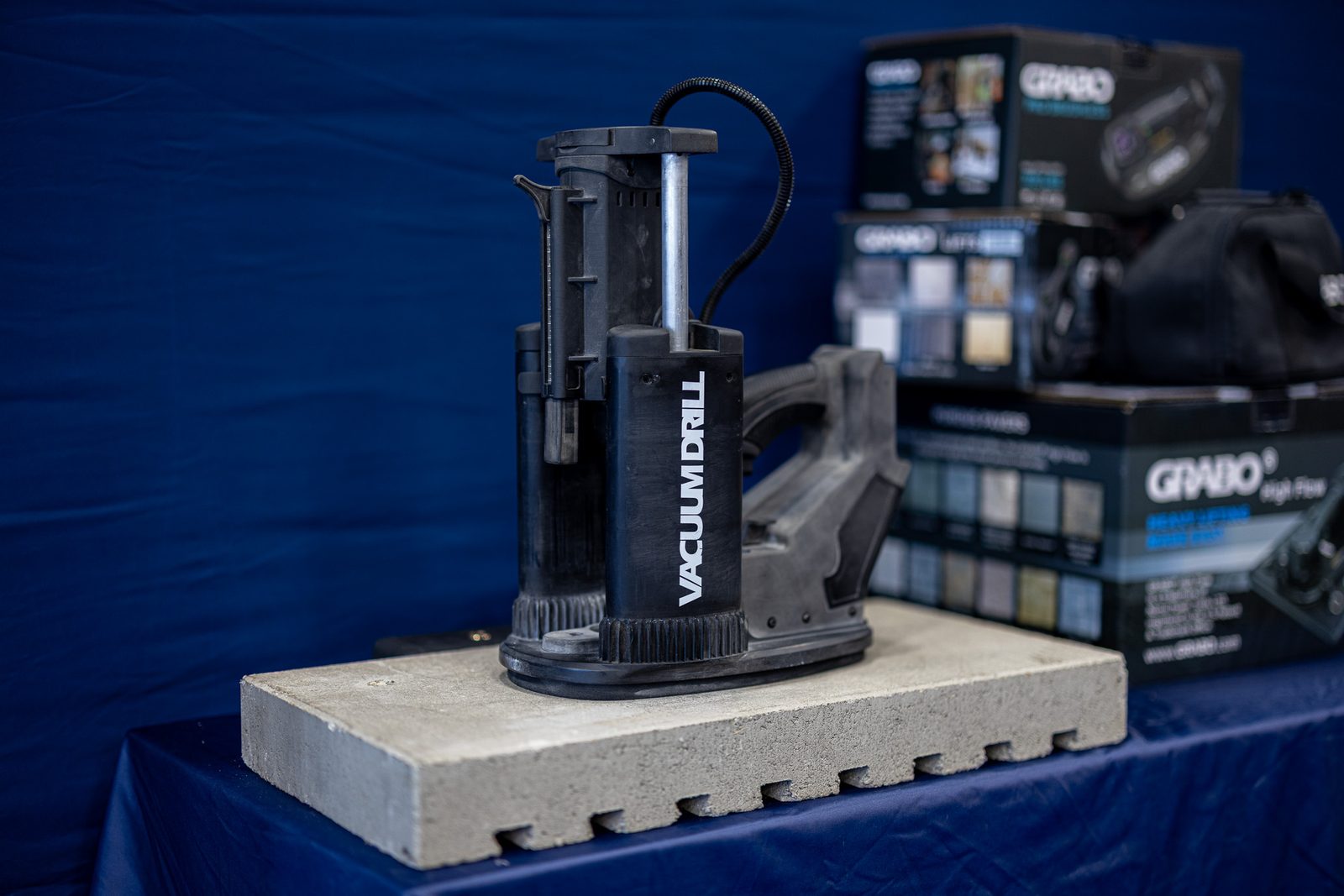
Why glass suits vacuum attachment
Vacuum attachment is at its strongest on surfaces that are flat, smooth and genuinely non-porous. Glass is all three, which is why the published 45 kgf figure is quoted for non-porous surfaces. GRABO's original product line — portable electric vacuum lifters — was built around exactly this property.
Where the tool fits
Fixings into or adjacent to glazed assemblies, frame and bracket work on curtain walling, and attachment to glazed panels where nothing can be clamped mechanically.
Drilling glass itself is a different operation
Hammer action must not be used on glass. Glass is drilled with diamond tooling, water cooling and no percussion. Do not treat a rotary hammer as a glass drill — see drilling glass.
Handle the edges
Glass fails from edge damage and point loading. Keep attachment away from edges and inspect for chips before applying any load.
Typical work
- Bracket and restraint fixings around glazed assemblies.
- Curtain wall framing and transom fixings.
- Attachment to glazed panels for handling and positioning.
Before you attach
- Inspect the glass for edge chips and scratches — glass fails from edge damage.
- Keep the pad well away from edges and corners.
- Confirm the pane is fully supported before applying any load.