Overhead drilling, mechanically
Above your head, gravity stops helping and starts working against you.
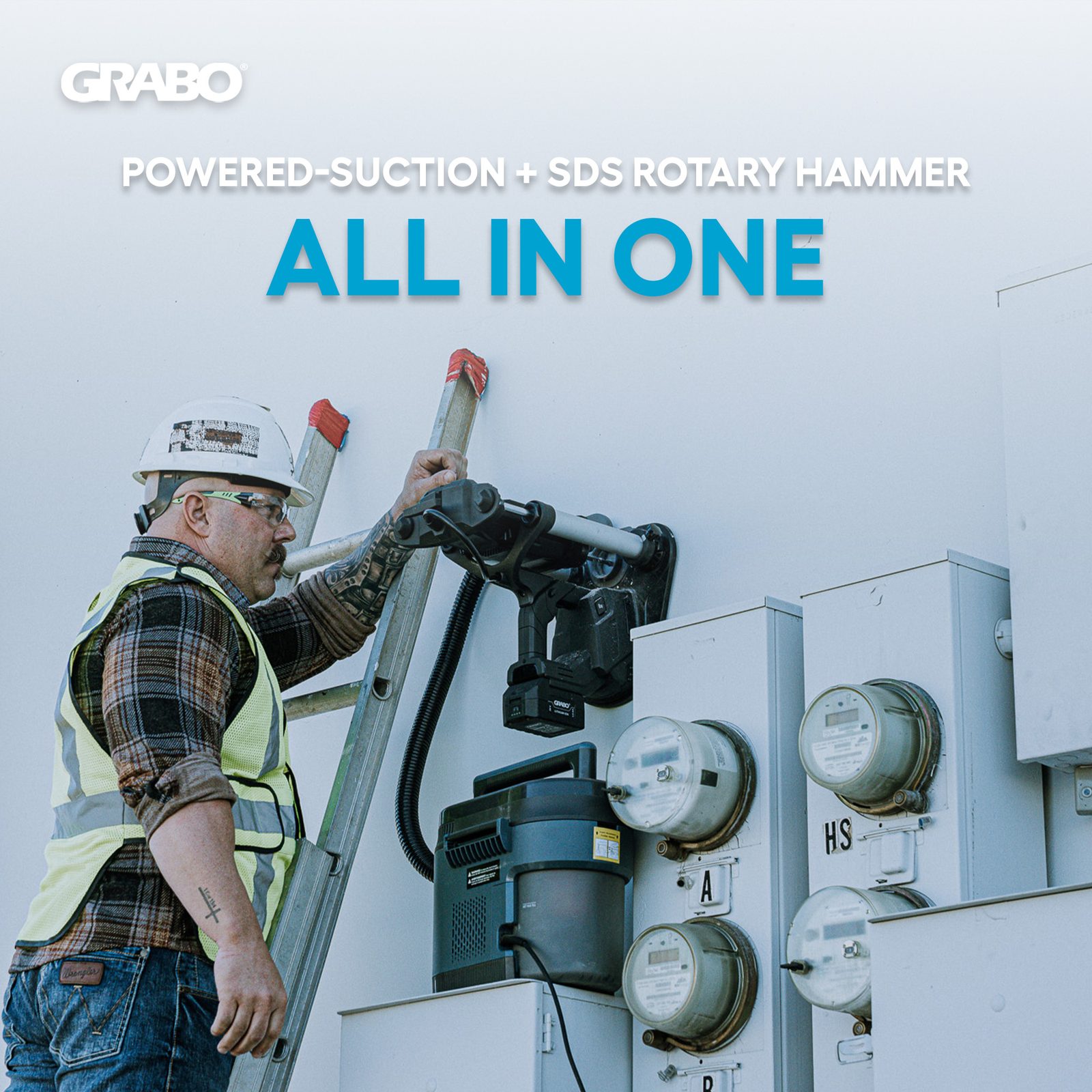
The freehand problem
Drilling into a soffit means supporting the tool's weight against gravity, supplying feed force upward, resisting hammer recoil downward, and keeping the axis true — with your arms extended above shoulder height, usually while standing on something.
It is the position in which accuracy and endurance fail first, and it is also where falling debris goes straight toward your face.
What changes when the tool anchors itself
The machine carries its own weight and supplies its own feed. The operator positions, sets and monitors rather than braces.
Because the base is sealed to the soffit and the extraction port is at the hole, dust and spoil are captured rather than falling.
Still your responsibility
- Overhead attachment demands the best surface preparation you can manage — the load case is entirely on the seal.
- Eye protection remains mandatory. Extraction reduces falling debris; it does not eliminate it.
- Plan for what happens if attachment is lost. Never work directly beneath the machine.
Questions about this
Is overhead attachment safe?
It is the load case that depends entirely on the seal, so it demands the best surface preparation you can manage. Prepare thoroughly, test the attachment by hand, never stand beneath the tool, and support its weight before releasing the vacuum.
What happens if it lets go overhead?
Vacuum attachment usually degrades gradually rather than releasing instantly — the pump works harder and the tool may creep. Treat any movement or change in pump behaviour as a stop signal.