Core Drilling with a Self-Anchoring Press: When to Choose a Diamond Crown
A rotary hammer breaks concrete. A core removes it. Knowing which you need is a geometry question before it is a tooling question.
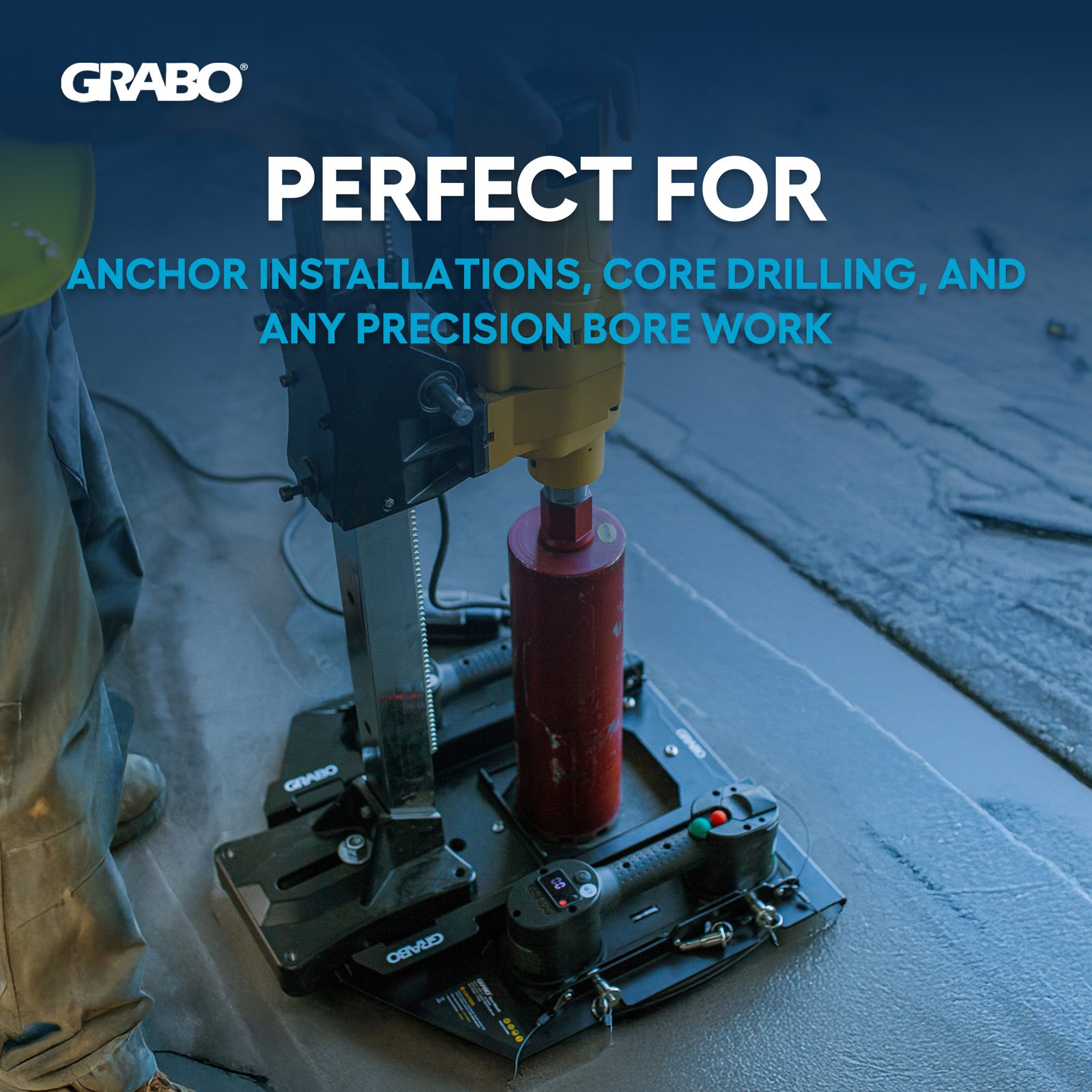
Two ways to make a hole
Rotary-hammer drilling fractures concrete with carbide edges driven by hammer blows and rotation. It is fast, tolerant, and ideal for anchor holes where the fixings will fill the void.
Core drilling removes a cylinder of material with an annular diamond or carbide crown. It is slower and requires more control, but leaves a clean, round wall with minimal spalling — essential for sleeves, through-penetrations and sensitive finishes.
Where the specification calls for a rebar-free, spall-free penetration — for example a 28 mm service sleeve in an exposed concrete soffit — a core is the defensible choice even though a hammer bit would be faster.
Why a press matters for cores
- A hand-held core bit side-loads easily. Any lateral force during the cut drives the crown into an oval and jams. A guided press eliminates side-load by constraining the bit to a normal-to-surface axis.
- VACDRILL's vacuum pad provides that normal reference. The column then feeds the crown without the operator steering. The crown tracks true from first contact to breakthrough.
- Depth control is even more valuable with cores: a blind hole with a flat bottom (for a back-box or sensor) requires a repeatable stop. The depth stop delivers it.
Water, dust and the seal
- Diamond crowns in concrete cut cooler and longer with light water. The goal is damp, not flooded: mist or drip at the lip is sufficient for crowns under 40 mm. Percussive carbide cores in masonry can run dry with extraction.
- Keep slurry off the pad. Before each hole, wipe the sealing face; after a wet core, re-check the pad before re-anchoring. Slurry on the lip is a seal breaker.
- Extraction remains useful for rotary cores and for the cleanup pass. Connect at the dust port before starting the cut.