Cordless vs corded for anchored drilling
A trailing lead reintroduces the hazard the tool removes.
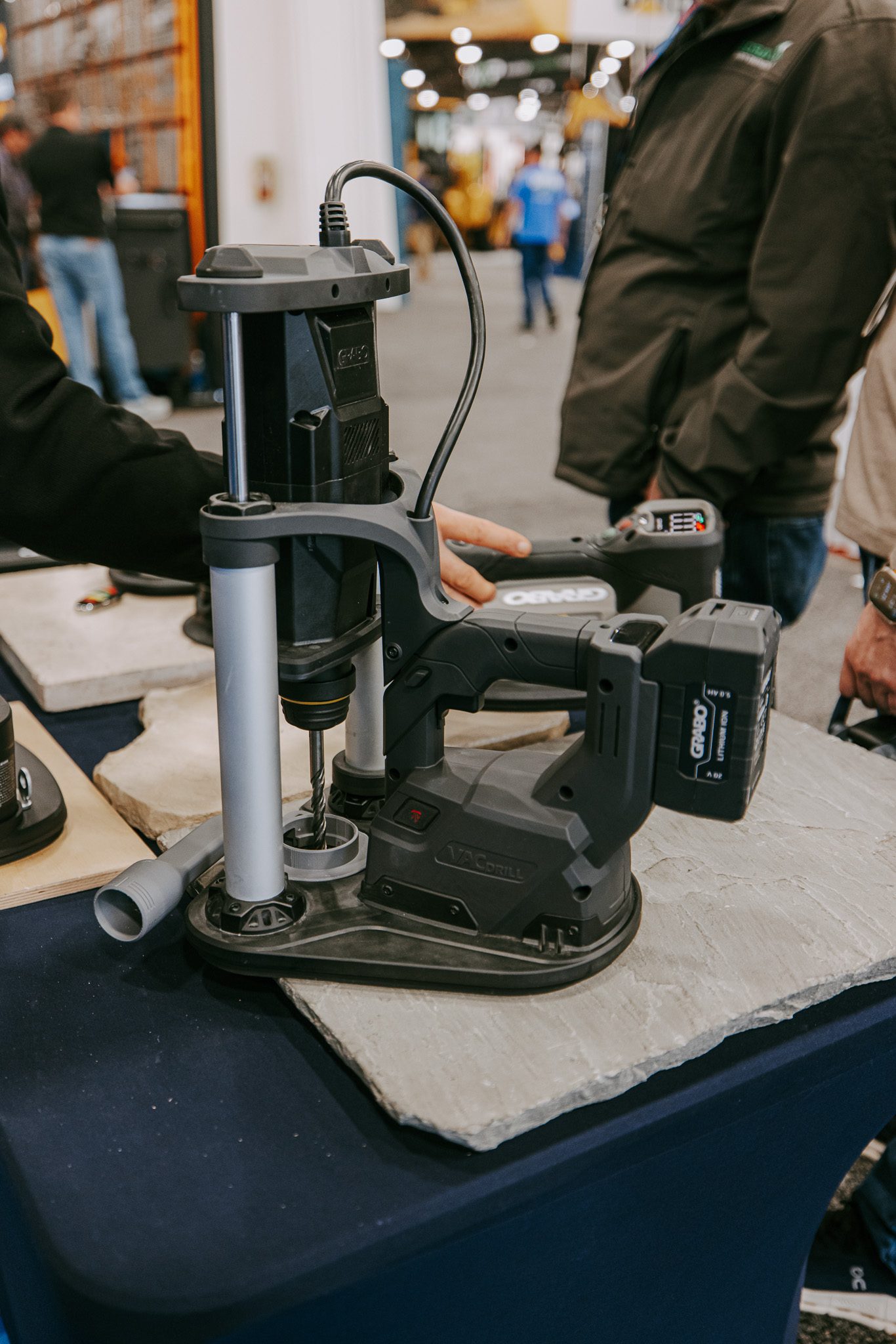
The case for cordless
The tool's purpose is working where bracing is hard — ladders, soffits, facades, shafts. A mains lead into those positions is a snag and trip hazard.
It also allows the machine to be placed and left anchored while the operator repositions.
The case for corded
Unlimited runtime and constant power for very high-volume, fixed-location work.
The specific complication here
The pump must never lose power while the tool is attached. A 20 V 6 Ah lithium-ion pack running down is a predictable, monitorable condition; a yanked extension lead is not.
Practice
Carry a spare pack, detach during breaks, and see battery care.
Questions about this
Why does it matter that the pump is battery-powered?
Because the pump must not lose power while the tool is attached. A monitored battery state is more predictable than an extension lead that can be unplugged or pulled.
Is runtime a practical problem?
It is a planning problem rather than a limitation. The pump draws whenever the tool is attached, so carry a spare pack and detach during breaks.