Engineered stone and the silicosis crisis
The most dangerous dust in the trade comes from the nicest-looking material.
What changed
Engineered quartz contains a far higher proportion of crystalline silica than most natural stone. As it became the dominant worktop material, fabricators worldwide began presenting with accelerated silicosis — in some cases after only a few years of exposure, and in young workers.
The regulatory response
Several jurisdictions have introduced licensing, enhanced controls, health surveillance requirements or outright prohibitions on the dry processing of engineered stone.
Australia moved to a national prohibition on engineered stone; other regions have tightened controls substantially.
Practical implications
Dry cutting, grinding or drilling engineered stone without extraction or water suppression is indefensible.
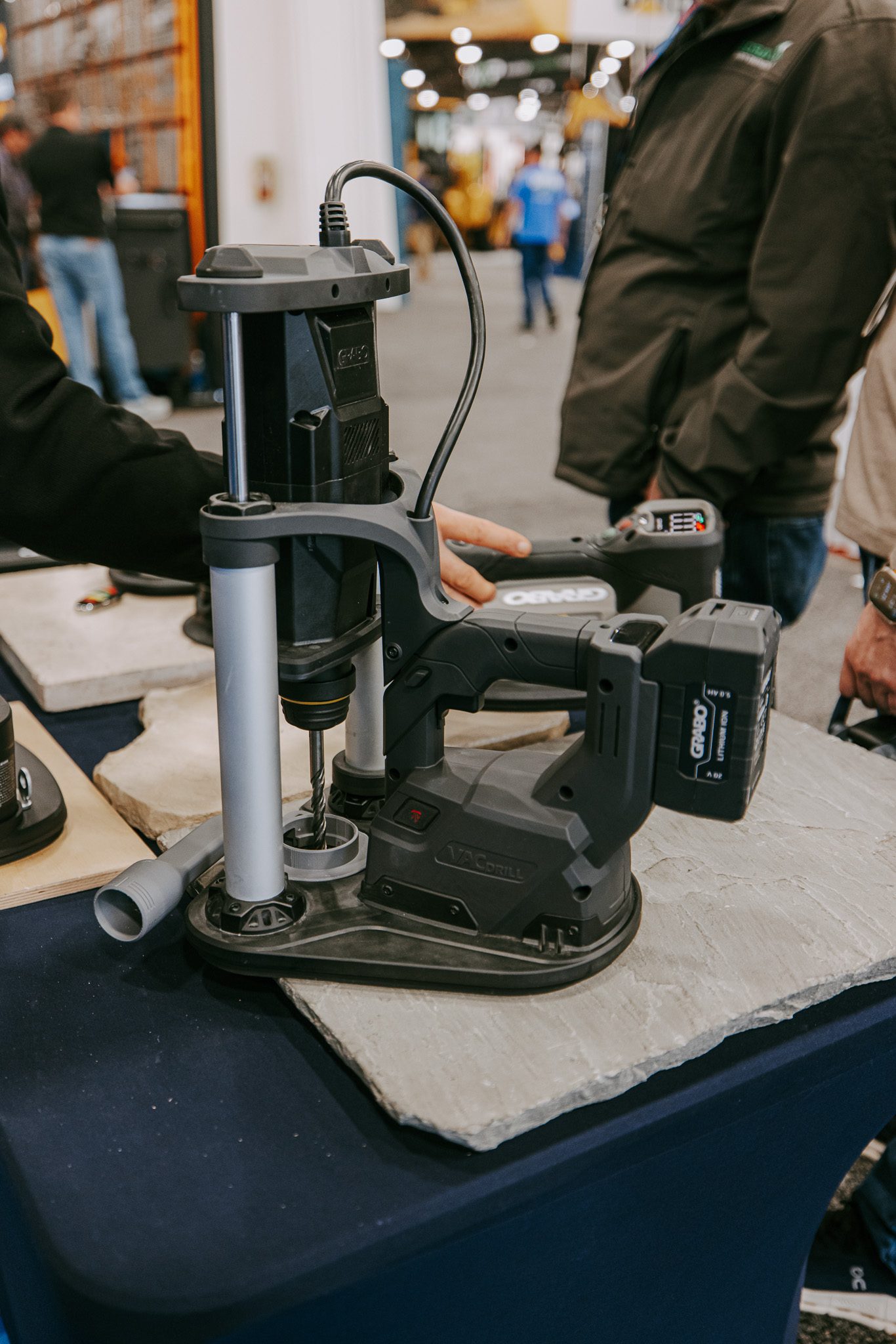
Drilling is a lower-exposure task than cutting or polishing, but it is not a no-exposure task.
Related
See drilling engineered stone and silica dust rules.
Questions about this
Why did engineered stone cause outbreaks when natural stone did not?
Its crystalline silica content is typically far higher, and fabrication involves high-energy cutting, grinding and polishing. The combination produced accelerated silicosis in young workers.
Is drilling it as dangerous as cutting it?
Drilling is a lower-exposure task than cutting or grinding, but it is not a zero-exposure task. Use extraction or water suppression.