Rotary hammer versus hammer drill
One delivers impact energy. The other just vibrates.
Hammer drill
A percussion (hammer) drill produces axial impact by ratcheting two toothed discs against each other as the chuck rotates. Impact energy is low and depends on the operator pushing hard.
Adequate for light masonry and the occasional hole.
Rotary hammer
A rotary hammer uses an electro-pneumatic piston to strike the bit directly, producing far greater impact energy that is largely independent of operator feed force.
This is what makes real progress in structural concrete possible.
Why the distinction matters here
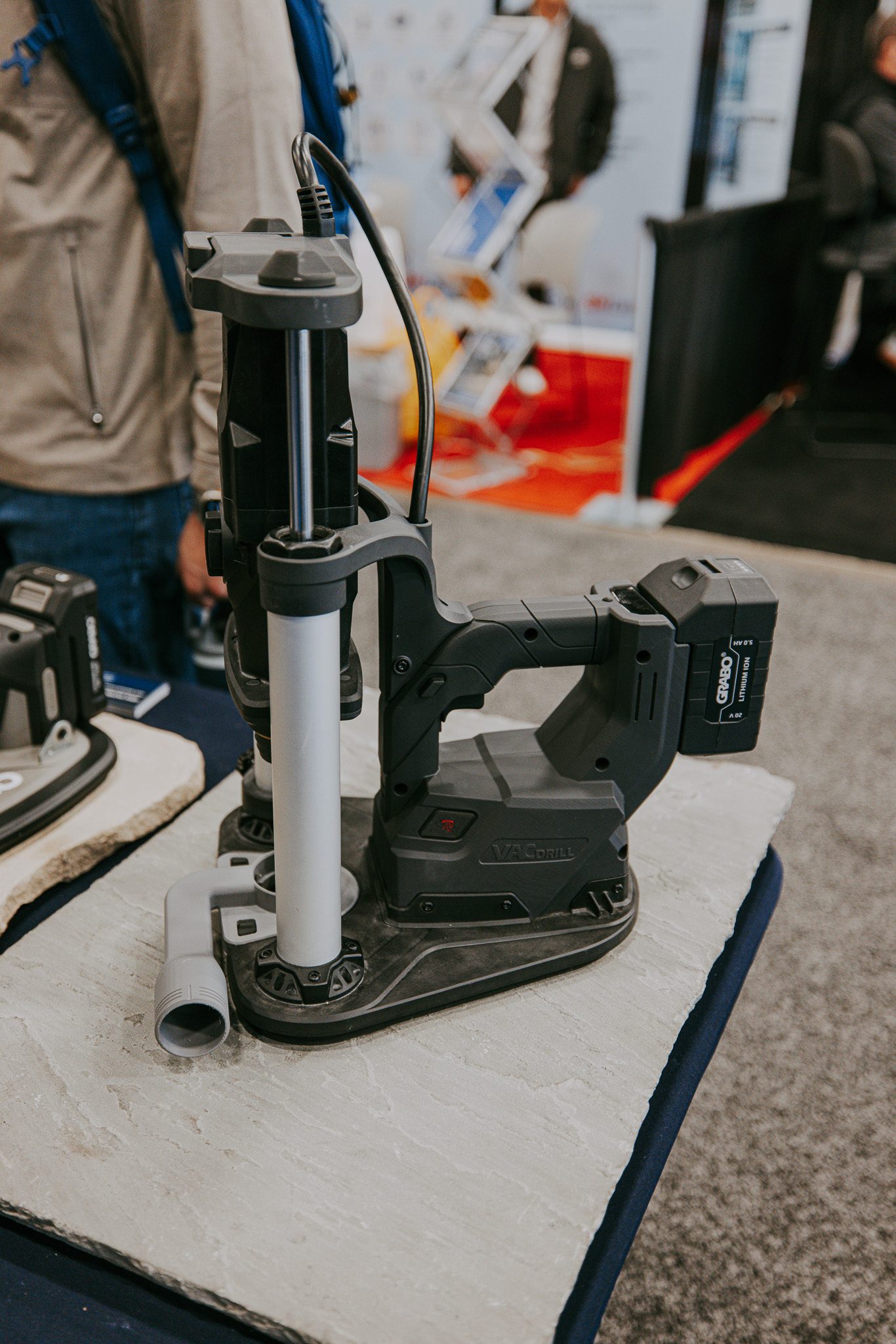
A self-anchoring machine removes operator feed force from the equation. With a percussion drill that would be a problem, because feed force is what generates the impact. With a rotary hammer it is not, because the piston supplies the energy. The VACDRILL uses SDS rotary hammer action.
Related
Questions about this
Which do I need for structural concrete?
A rotary hammer. A percussion drill's impact energy is low and depends on operator feed force, which is why it struggles in structural concrete.
Why does the distinction matter for a self-anchoring tool?
Because the machine removes operator feed force. With a percussion drill that would remove the source of impact energy; with a rotary hammer the piston supplies it independently.