Why SDS, and how rotary hammers cut
Hammer drilling is not drilling. It is controlled percussion with rotation.
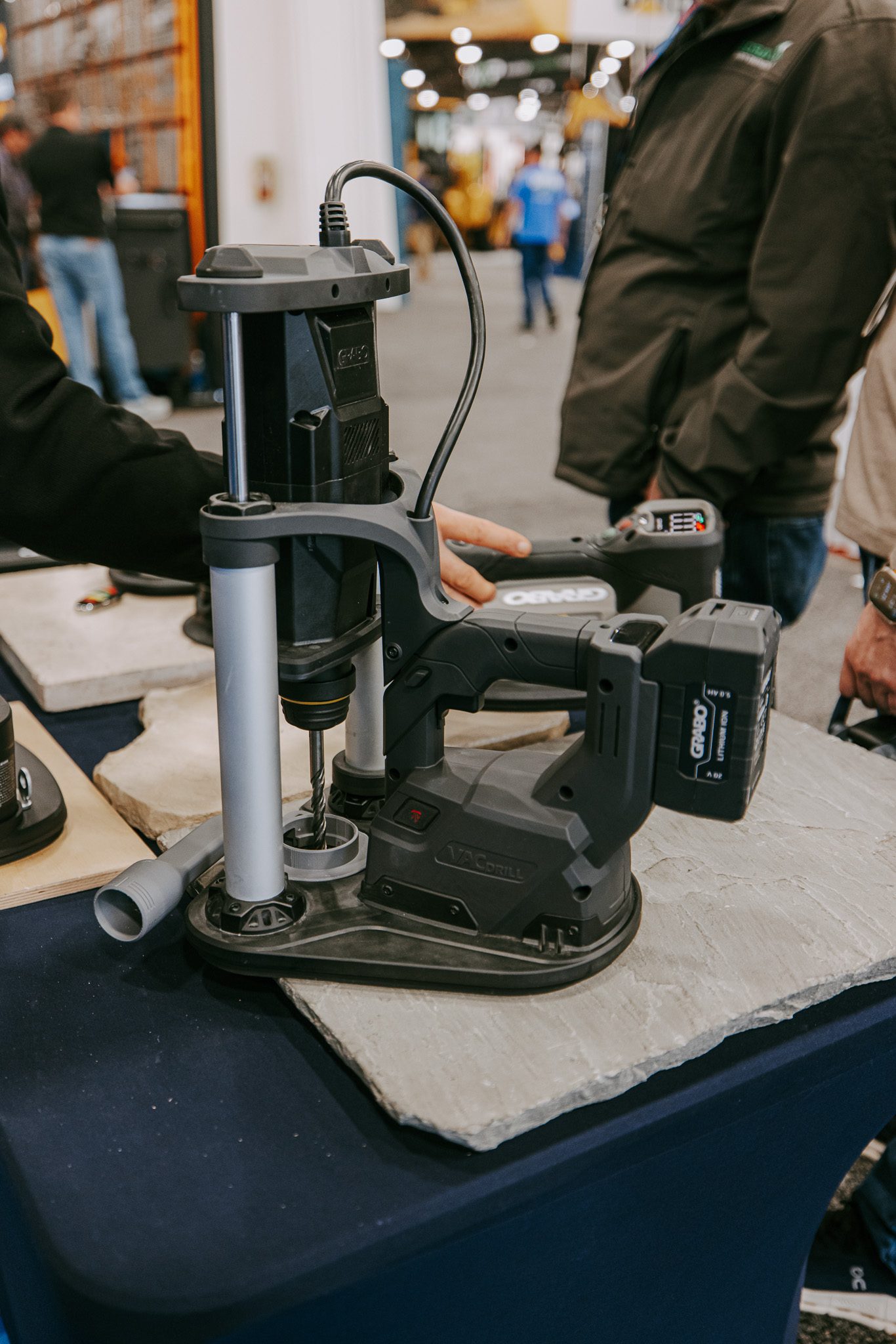
The mechanism
A rotary hammer drives a piston that strikes the back of the bit, sending a compressive shock wave down its length to the carbide tip. The tip fractures a small volume of brittle material; rotation then indexes the tip to fresh material and the flutes evacuate the debris.
This is why a rotary hammer beats a hammer drill in masonry: it delivers real impact energy rather than vibrating the chuck.
What SDS gives you
SDS ('Steck-Dreh-Sitzt' — insert, twist, seated) is a slotted shank standard. The bit is held by locking balls in slots but is free to move axially, so it can be struck. There is no chuck to tighten and nothing to slip.
The VACDRILL takes SDS bits up to 40 mm in diameter and 200 mm in length. See choosing drill bits.
Matching the bit to the job
- Bit diameter is dictated by the anchor, not by preference. Read the anchor's data sheet first.
- Longer is not better: an unnecessarily long bit is less rigid and harder to keep true.
- Worn carbide is the most common cause of slow drilling. A dull bit generates heat and dust instead of chips.
Questions about this
Can I use ordinary round-shank masonry bits?
No. The tool is specified for SDS bits. An SDS shank is slotted so the bit can be struck by the piston while being retained — a plain round shank has nothing to lock into and cannot transmit hammer energy.
Does hammer action damage the vacuum seal?
It is the hardest thing the seal has to cope with, because percussion adds cyclic reaction and vibration on top of static load. That is precisely why surface preparation matters more here than on a lifting tool.