VACDRILL for concrete contractors
Repeatable embedment across a whole anchor pattern.
The job
Concrete work is dominated by holes: anchor bolts, dowels, threaded rod, rebar dowelling, baseplate patterns. The holes are rarely difficult individually; the difficulty is doing eighty of them to the same specification, often overhead, without the quality drifting as the crew tires.
Where the tool fits
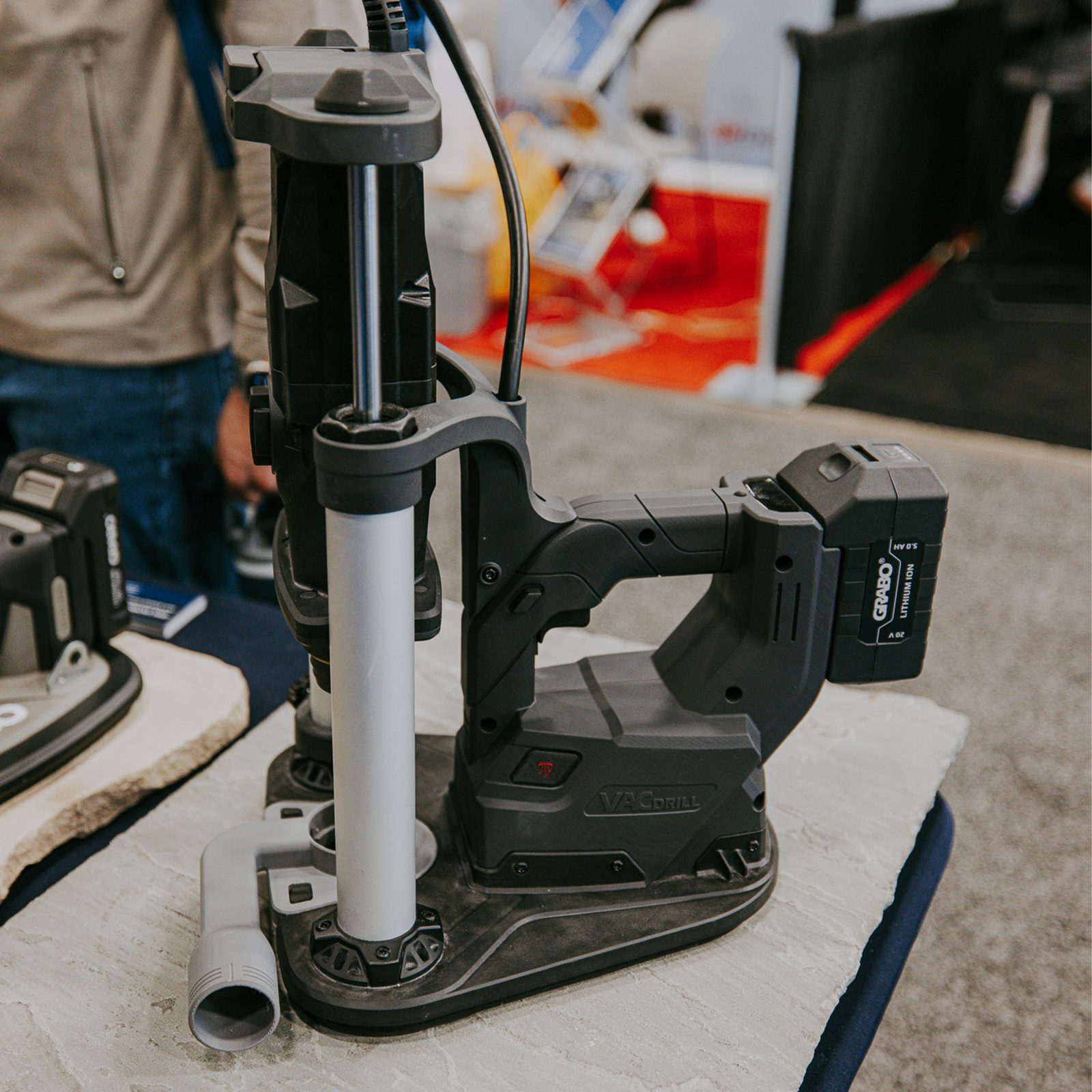
Anchored to the slab or wall, the VACDRILL fixes the drilling axis and stops at a set depth, so hole 20 matches hole 1. Max depth is 145 mm, with SDS bits to 40 mm diameter.
For adhesive anchors, geometry consistency is directly a load-capacity issue — see embedment depth.
Surface reality
Cured, floated or power-trowelled concrete usually seals well. Freshly broomed, heavily textured or very green concrete is leakier — see drilling concrete.
Always sweep the attachment area. Concrete dust is the classic seal-killer.
Dust
Concrete drilling is a primary source of respirable crystalline silica. The dust port is the point of the design — see silica dust rules.
Typical holes on this work
- Cast-in and post-installed anchor bolts for baseplates and equipment.
- Dowel holes for slab-to-slab and slab-to-wall connections.
- Threaded rod for suspended services.
- Post-installed rebar for structural connections — see post-installed rebar.
Before you attach on this substrate
- Sweep the pad footprint — concrete dust is the main cause of a poor seal.
- Check the finish: trowelled and formed faces seal far better than broomed or tamped ones.
- Confirm the concrete is mature. Green concrete is wetter, weaker and holds curing compounds.
- Scan for reinforcement and, in post-tensioned slabs, stop until a competent survey clears the area.