VACDRILL for stone, tile and surfacing
Brittle, expensive material where a wandering bit is a scrapped slab.
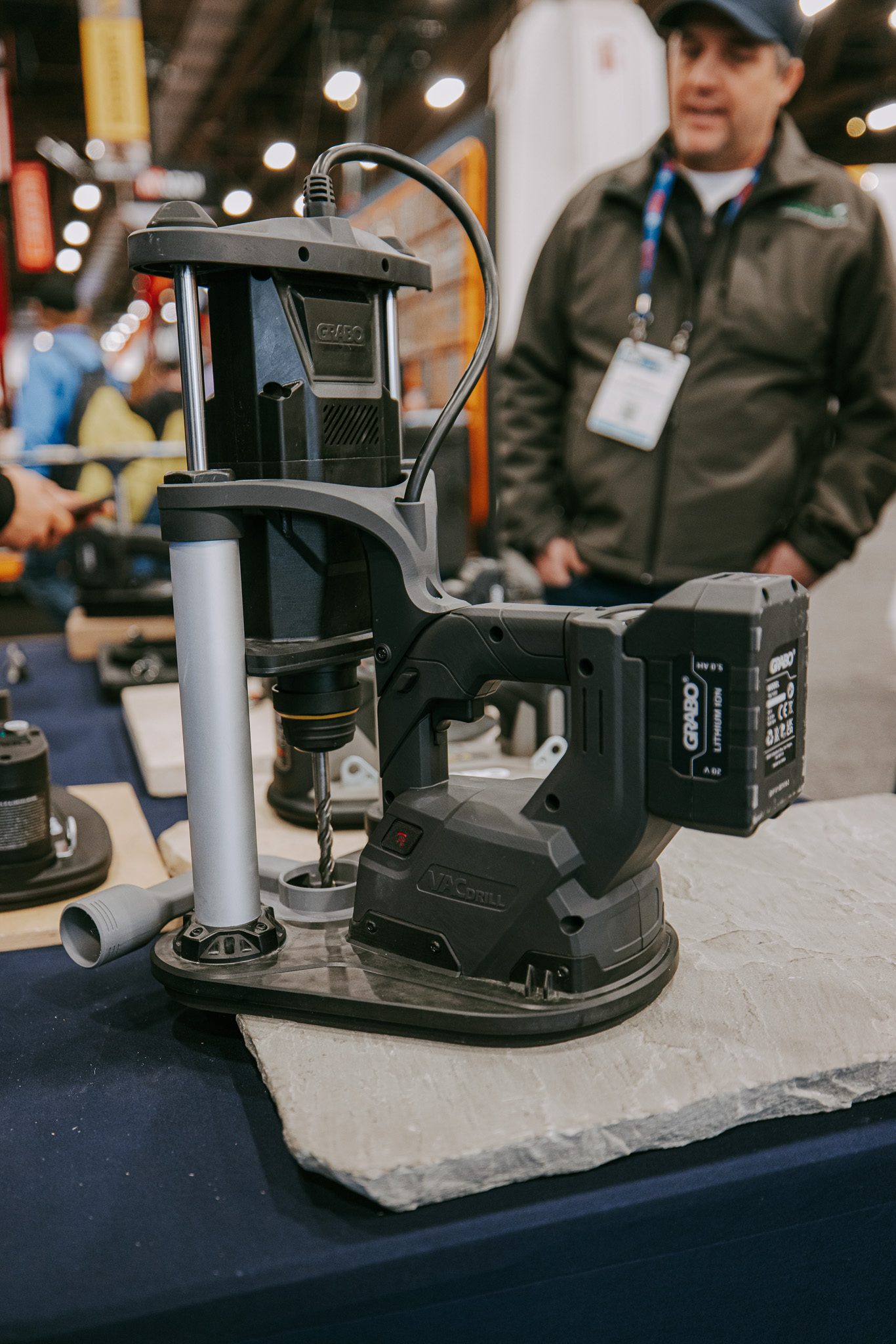
The job
Worktop fabrication and installation, tiling, cladding and surfacing all involve holes in materials that are dense, brittle and costly. A chipped or off-position hole can write off a whole piece.
Where the tool fits
Polished stone and porcelain are excellent vacuum surfaces, so attachment is strong and predictable.
A fixed axis and controlled feed reduce the chipping and breakout that come from a bit skating on a hard polished face.
Technique matters more than power
Dense stone and porcelain are usually drilled with diamond tooling, not percussion. Reserve hammer action for masonry — see natural stone and porcelain tile.
Dust
Engineered stone is high in crystalline silica and has been associated with severe occupational disease among fabricators. Capture at source is essential, not optional — see engineered stone and silica.
Typical work
- Worktop fixings, brackets and undermount supports.
- Cladding and facade panel restraints.
- Tile drilling for fixtures and fittings.
Before you attach
- Polished faces are ideal; honed, riven and flamed finishes are progressively worse.
- Tap tiles and check they are well bonded before attaching to them.
- For engineered stone, extraction is not optional — see engineered stone and silica.